Remember that? Used to be a thing. People advocated it as a solution to climate change (with dubious ‘national security’ benefits) but then things kept melting down, and costs kept going up compared to zero-waste alternatives, and everyone went off the idea.
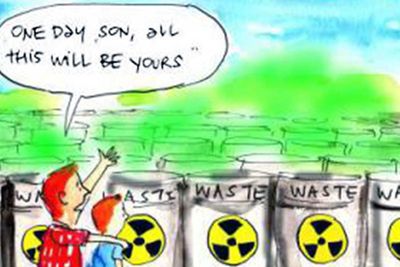
The Eternal Toxic Nightmare!
Well, that’s not exactly what happened. China, for starters, is still massively investing in atomic energy. China said in its 2021-2025 five-year plan released on Friday that it would raise total nuclear capacity to 70 gigawatts (GW) by the end of 2025, Reuters reports. Capacity reached 51 GW at the end of last year, falling short of its 58 GW target.
And there are calls for it to go much further from senior members of the country’s parliament who are also linked to the industry. To the east, in Japan, there is also a conversation about bringing Nuclear back from the cold.
A government advisory group set up to discuss how the country can cut emissions has – apparently – started to veer towards a massive restart of nuclear energy.

“Since Japan pledged in October to become carbon neutral by 2050, many among the advisory group have reached the same conclusion. To meet its global climate commitments, the country will need to restart almost every nuclear reactor it shuttered in the aftermath of the 2011 meltdowns, and then build more,” Bloomberg reports.
Indeed the Economist has noted something is happening in the ‘global conversation on climate change’ and has a special take on it, arguing that it is “an essential weapon in the fight against climate change”. Obviously, many of the assumptions behind this renewed interest in expensive, volatile, waste-factories are debatable and other factors complicate the discussion. Building nuclear power plants is very good at job creation, for example. However, it is, once again, a conversation that’s happening.

The Eternal Toxic Nightmare!
 Baffled Ape