Zen and the Art of DIY Motorcycle Maintenance #07 …

First MOT Test since 2010 …

Back in Part 5 I explained how here in the UK vehicles have to pass an annual MOT Test for road worthiness. Well, I am very pleased to report that the 1983 Honda CB 250 RSA passed! This was a great relief and pretty much ‘mission accomplished’ for getting this classic little bike up, running and on the road again. The final legal step is Road Tax, just 6 months which will take us into 2024 when this bike can be re-classified as an Historic Vehicle and will no longer require either road tax or an annual mot test.

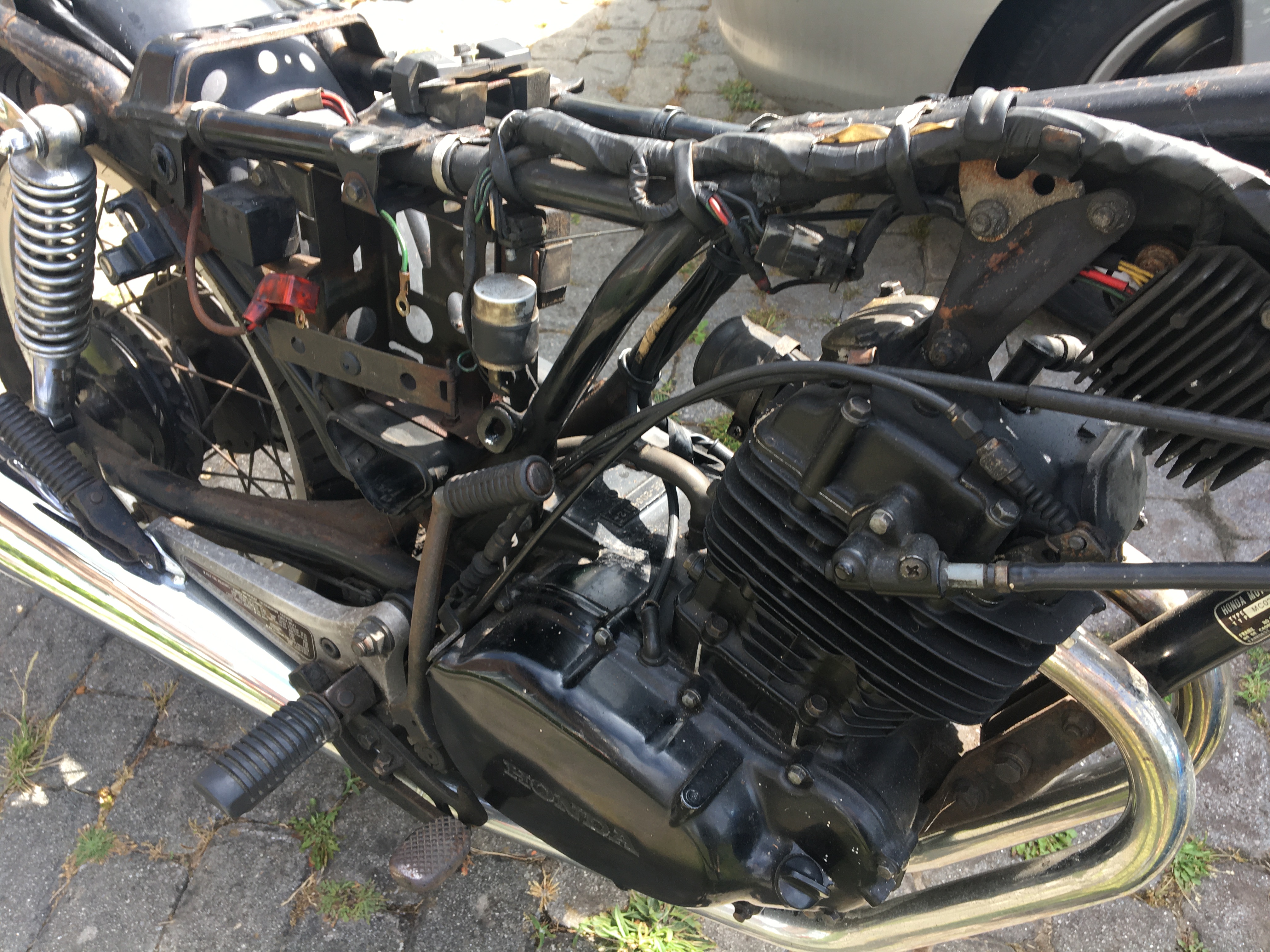
On the day of the MOT it rained, and it rained for days afterwards. But on Sunday 6th August the little classic Honda went out for a 26 mile shakedown ride after first stopping for a tankful of E5 petrol …
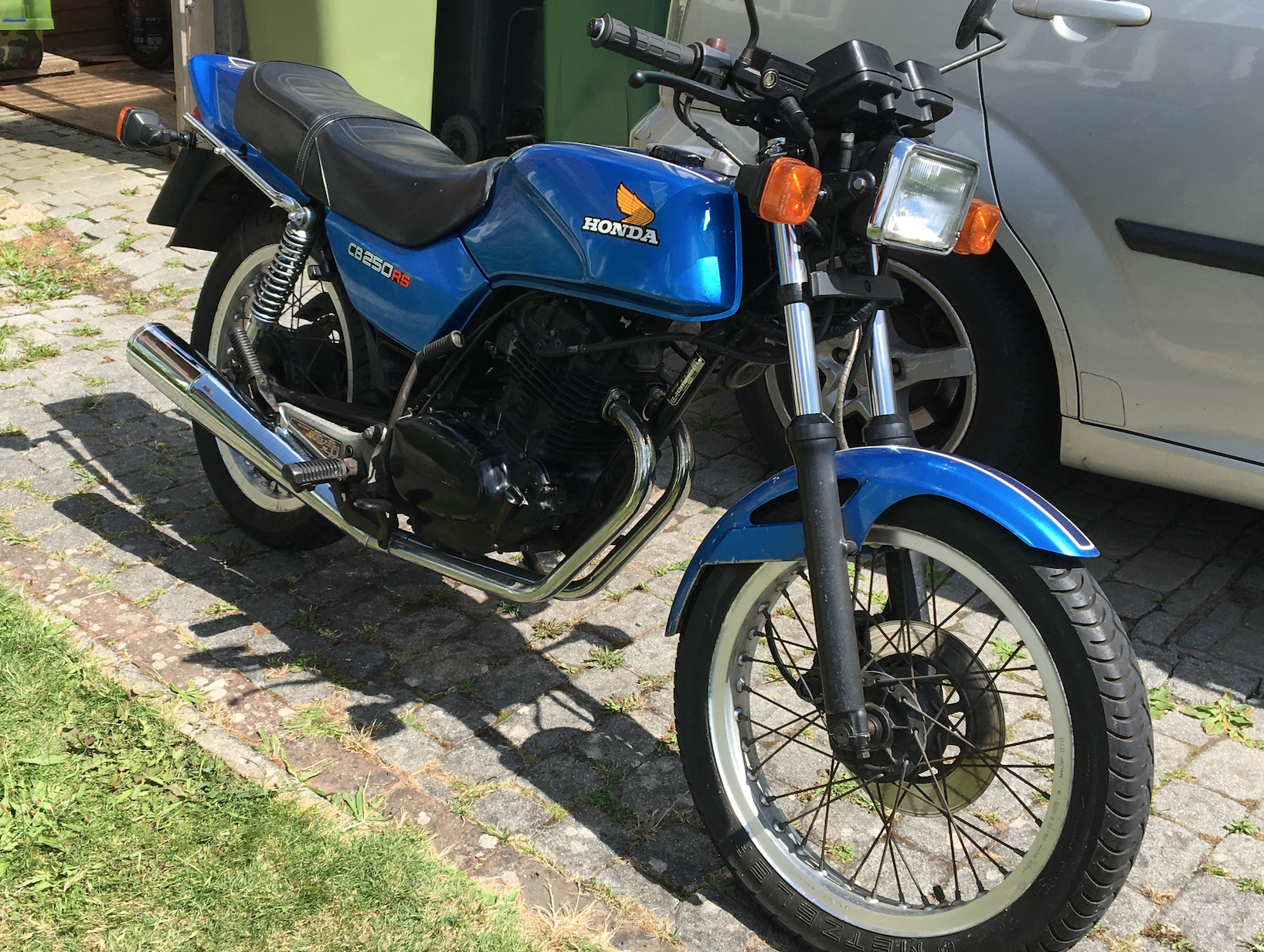
… Here she is at Galley Hill for half decent photographs.
Just over 13 years since last MOT/Road use, but carefully stored in a dry garage by my brother and brought back to life as told by these recent blog posts – Recap Part 2 Part 1 Part 3 Part 4 Part 5 Part 6 … the great little Honda PASSED ‘Fit For The Road’ once again!

Lightweight and agile, Honda’s CB250RS conflicted with its own Superdream for sales and was never as popular. Now, they can be a great back-lane bike with big H reliability.

A great review by Classic Bike Guide

While tackling all the tasks I’ve detailed in this series of blog posts I had to do a fair amount of web searching for parts etc. While doing so I came across the review above which tells the history of this great (and often overlooked) little motorcycle. If you’re a veteran of 1970’s/80’s Japanese bikes it is a great read.

End of Part 7 – And end of this story for now. There are other tasks on my list that no doubt I will add to the ‘Zen and the Art of DIY Motorcycle Maintenance‘ blog posts. For me working on the bike and bringing it back to life and road worthiness has been a very rewarding and wonderful mindful distraction from the ever increasing current financial struggles, and I have to thank my brother for granting me custody of his classic motorcycle and not least for financing the many replacement parts required.

So I realised that as this little story reaches its successful conclusion, another story begins. And that story is my own personal re-association with motorcycles, re-discovering the joy of riding and as I saw somewhere on YouTube the mindful benefits of ‘Throttle Therapy’.

There may be more posts 😉

Thank you for reading.

Recap Part 2 Part 1 Part 3 Part 4 Part 5 Part 6

… And if you’ve just joined at Part 7, below is a little background to this story.

Motorcycling is in my blood [ RIP Dad – A Truly Great Father ] and because of motorcycles I’ve literally spilled many pints of blood [ Conscious Throughout ] My Dad passed the DNA and the bug to me in 1976 aged 15. My younger brother then aged 10 also caught the bug and eventually carried on the motorcycling tradition for far longer than myself. I rode on and off from age 15 to 40, all weathers, commuting on various ‘hack bikes’ while pampering and saving the main bike for dry (mainly) runs out for the sheer joy of riding. My brother recently bought a new 2023 Triumph 765 Street Triple R, a two wheeled sculpture if ever there was such a thing. The Street Triple was to join his stable of bikes alongside his classic Triumph Daytona 1200, and another classic, the Honda CB250 RSA you see below. The little Honda was his ‘hack bike’ back in the day, not used since 2010 and carefully stored, dry and covered in our Dad’s old garage. That garage is a shrine to our dear father, not really disturbed since his sad passing in 2016.

So the Street Triple needed room, the garage needs sorting but both my brother and I are dreading the day we have to disturb our Dad’s workshop and birthplace to so much of his woodwork creativity, and so many precious memories. The motorcycling bug never dies, although I myself have not ridden for over 20 years, the pull has always been there and watching the wonderful Allen Millyard‘s YouTube channel has fed my interest in the mean time, and when my brother suggested I take custody of his little classic Honda and get her back on the road I jumped at the chance!

… And Why ‘Zen’?

There’s a stand out section for me in the book Zen and the Art of Motorcycle Maintenance, and it is the part where the author describes making, or proposing to make makeshift ‘shims’ for his friends John and Sylvia Sutherland’s new and exclusively dealer serviced BMW motorcycle. Pirsig tries to explain how shims made from a discarded Coca-Cola can would be perfectly adequate and functionally identical to those fitted by the BMW Dealer’s mechanics at exorbitant costs. John Sutherland could not see this or be convinced, so programmed was he that only the main dealer has the expertise, equipment and materials to carry out such a task.

“In the book, the narrator describes the “romantic” approach to life of his friend, John Sutherland, who chooses not to learn how to maintain his expensive new motorcycle. John simply hopes for the best with his bike, and when problems do occur he often becomes frustrated and is forced to rely on professional mechanics to repair it. In contrast, the “classical” narrator has an older motorcycle which he is usually able to diagnose and repair himself through the use of rational problem-solving skills.”

A cheap, enjoyable, rewarding and mindful hobby – Trail Cams …

Trail Cameras? Ever heard of them? No me neither until 18 months ago or so. Some time back my wife suggested I build a Hedgehog house, so out of scraps I knocked up the little house that can be seen below.

Our ‘made from scraps’ Hedgehog house. See its construction Here.

The little hedgehog house was built and positioned as advised the various hedgehog groups my wife follows on facebook, but no visitors. “We need a camera” she proclaimed, so I started googling as you do but soon became quite despondent due to the price of these things, the baffling range, features etc. But my wife really wanted one and by this time x-mass was approaching and she suggested perhaps me and the kids could ‘chip-in’ for one. So that’s what we did for her that x-mass (2020), about £80, good reviews on Amazon, and as I write this in July 2023, it has served us well, provided entertainment, given me a new (free after the initial purchase) hobby/pastime with the camera set-ups and video clip editing etc.

And as the collection of little videos grew, I wanted to store them somewhere for prosperity and to enable sharing with friends & family but although short, the video files were too big to share via iMessage, e-mail etc. So where better than YouTube!

First Set-Up using old galvanised pipe salvaged from a scrap kids trampoline and cable ties with the subject hopefully birds visiting the bird bath … see below
… And here is some of the footage that first set-up gave us
So, the CamPark T150 captures stills or video on a micro sd card. There is a PIR sensor adjustable for sensitivity, an infra red light, night vision, and the length of video clip is adjustable in the settings which are all accessable wirelessly via an App on phone or iPad. It has an internal rechargeable battery which once fully charged before firs use from a USB charger and is kept topped up by the inbuilt solar panel. I was very sceptical about this given the solar panel size and being a budget Trail Cam, but apart from that first charge in 2021 the little panel has kept the camera working day in day out! There is also an integral ‘backup’ battery bank of 4x AA cells which are still unused according to the menu readout!

We were enjoying watching the birds and other garden visitors from this one camera siting, but then (using more scrap pipe) I created another camera position below, much lower and with a wider view of our small garden from the opposite end …

This camera position gave us the footage below which I gave the working title “Cat Kill Fox Steal” … and it seems (from the YouTube comments) my bad grammar and poor english drew viewers in their 000’s

21st April 2022, at half past midnight and our cat ‘Minnie’ becomes somewhat famous 😉
Minnie then gained more fans (and us much criticism) with this short clip

Soon I was in a routine of collecting the camera daily while out feeding the pet rabbit, fish, wild birds etc. The process of transferring the video files from the micro sd card to the laptop is a little tedious but the results are worth it. But some days there is nothing at all on the camera, sometimes there are dozens even hundreds of clips recorded that have to be looked at ‘just in case’ only to find that the sensitivity was set too high and all you have captured is a blade of grass or some other greenery just blowing in the wind. Or my first rookie mistake the trains passing by as our garden backs onto the railway!

Here are some other clips …

Young Badgers, May 2022
Our pet Rabbit ‘Pluto’ with special guest ‘Minnie’ our famous cat!
Garden visitors January 2023
And a whole host of Garden visitors from April this year.

I have since modified the old kids trampoline galvanised pipe to provide an articulated and swiveling camera mount with various lengths of pipe to enable various set-ups and positions, see below one example …

Back in 2021 the cable ties were a ‘do for now’ experimental fixing to impatiently capture some footage. The idea remains unchanged! It just ‘works’. The camera is easily removed by gently sliding upwards, and when replacing on any of the various ‘camera mounts’ (old trampoline pipes) simply hooks back over the pipe and locates positively against the underside of the inbuilt solar panel. Simple is usually best, but I may succumb to my wife’s insistence that I at least trim the excess cable ties … maybe? We’ve since also painted the pipes green and disguised with some cheap fake ivy. That works too!

So if you want a cheap mindful escape from reality, the cost of living crisis, politics and all the other madness that is our modern world, then I can highly recommend one of these little cameras and the wealth of wildlife that lives its life on your doorstep.

I currently have a folder full of 20 second video clips on my laptop’s desktop. Viewing/compiling/editing takes time and in my mind is a ‘winter pastime’ huddled under a blanket with the laptop, so I have no plans to sift through those clips while the weather is good. But I’m still collecting the footage so watch this space for updates.

Thank you for reading & watching 🙂

PS: I almost forgot to say “Have you worked out why we have no Hedgehogs?” … I believe the answer is in the footage we’ve captured and shared here? We’d be pleased to hear any comments.

Zen and the Art of DIY Motorcycle Maintenance #06 …

Rear Brake Adjust …

A 40 year old Classic Honda Motorcycle. No road tax, no MOT, cheap to run, cheap to insure – an answer to the Cost Of Living Crisis? Maybe, but more importantly for me, a mindful escape into hands on problem solving and rejuvenating old skills.

What follows is a pictorial account with description of the progress of that restoration – Part 6 Rear Brake Adjustment …

Every motorcycle I’ve ridden since I came to grief on a bike in 1979 has required an adjustment to the rear brake pedal to compensate for my resulting ‘drop foot’.

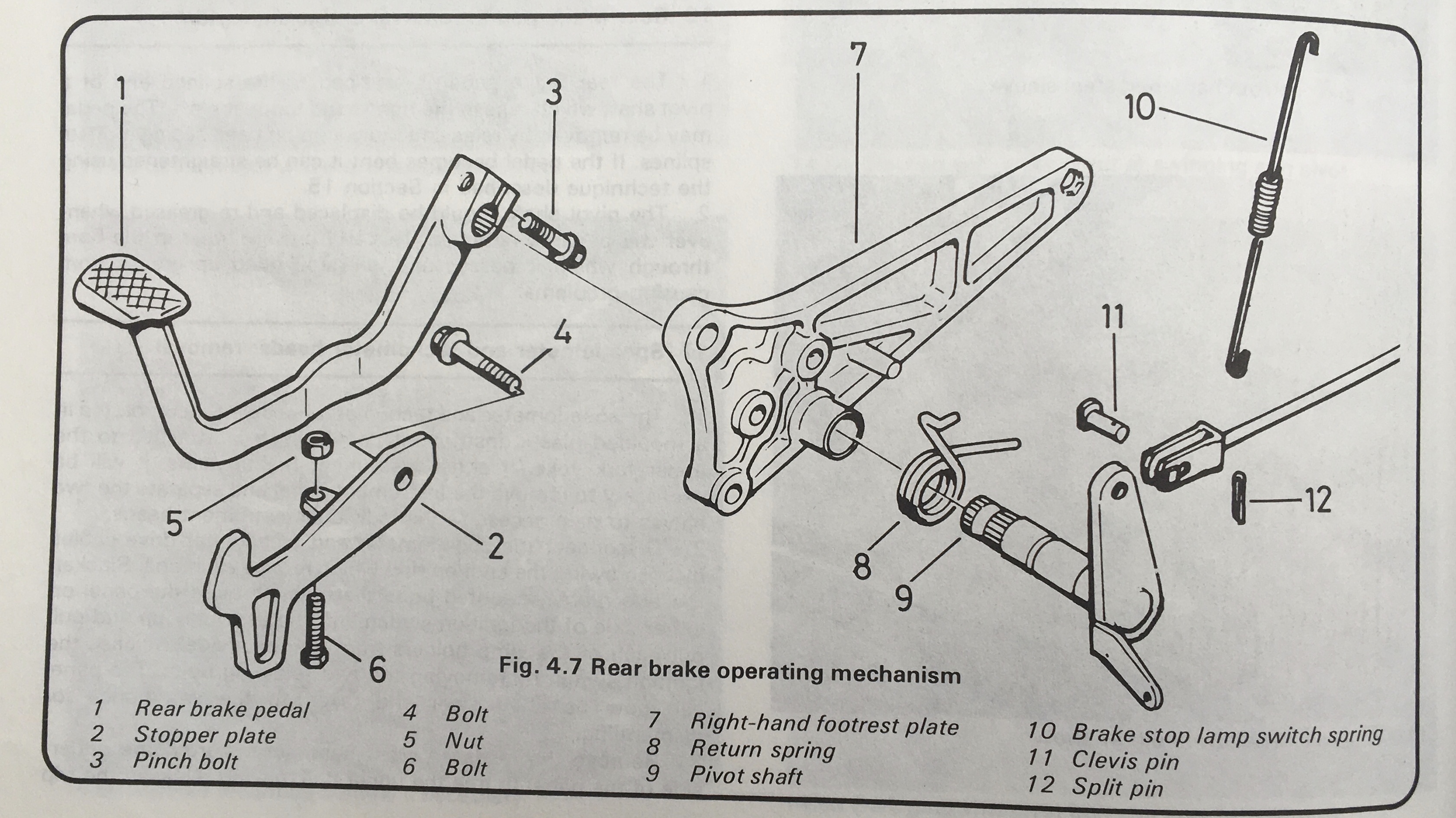
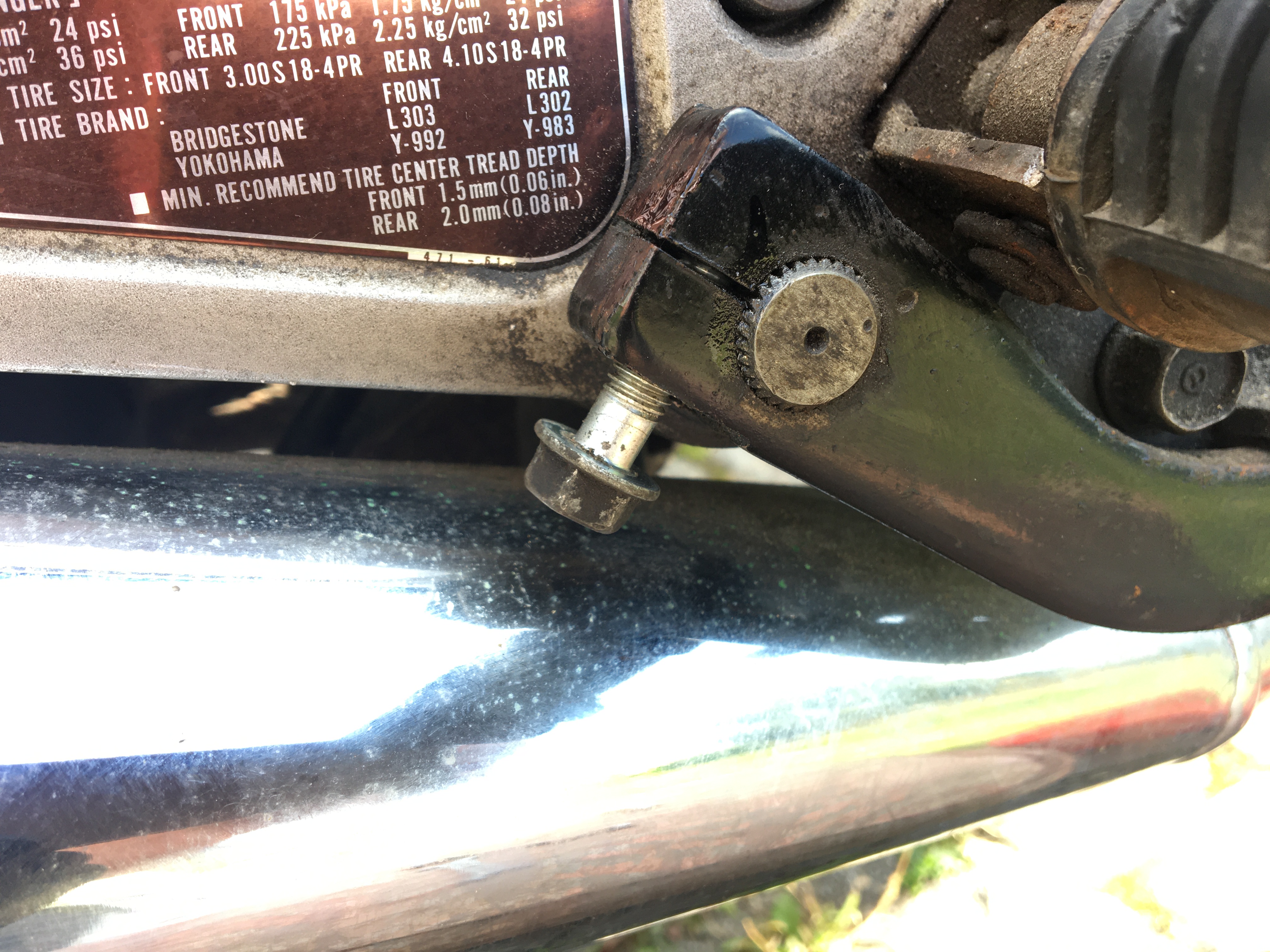
Because of the medical condition I mention above, I need to have the rear brake pedal set a lot lower than standard. This has always been achievable with a few tweaks to the existing adjustment points. In the diagram above, the height of the rear brake pedal (1) is set by adjusting bolt (6) and locknut (5). However the standard bolt (6) is not long enough to achieve my desired pedal height, so I substitute for a longer bolt. Also to achieve the necessary lowering of the pedal I remove the brake pedal and turn it clockwise by one increment on its splined shaft (9) See actual images below …
To remove the lever, this clamping bolt has to be fully removed as it sits in a groove on the shaft (see 9 on the diagram above)
Here is the actual rear brake lever pivot having been removed and turned clockwise by one increment on its splined shaft. You can see the dot on the shaft and the dot on the lever are now not aligned as they were when the bike left the factory.
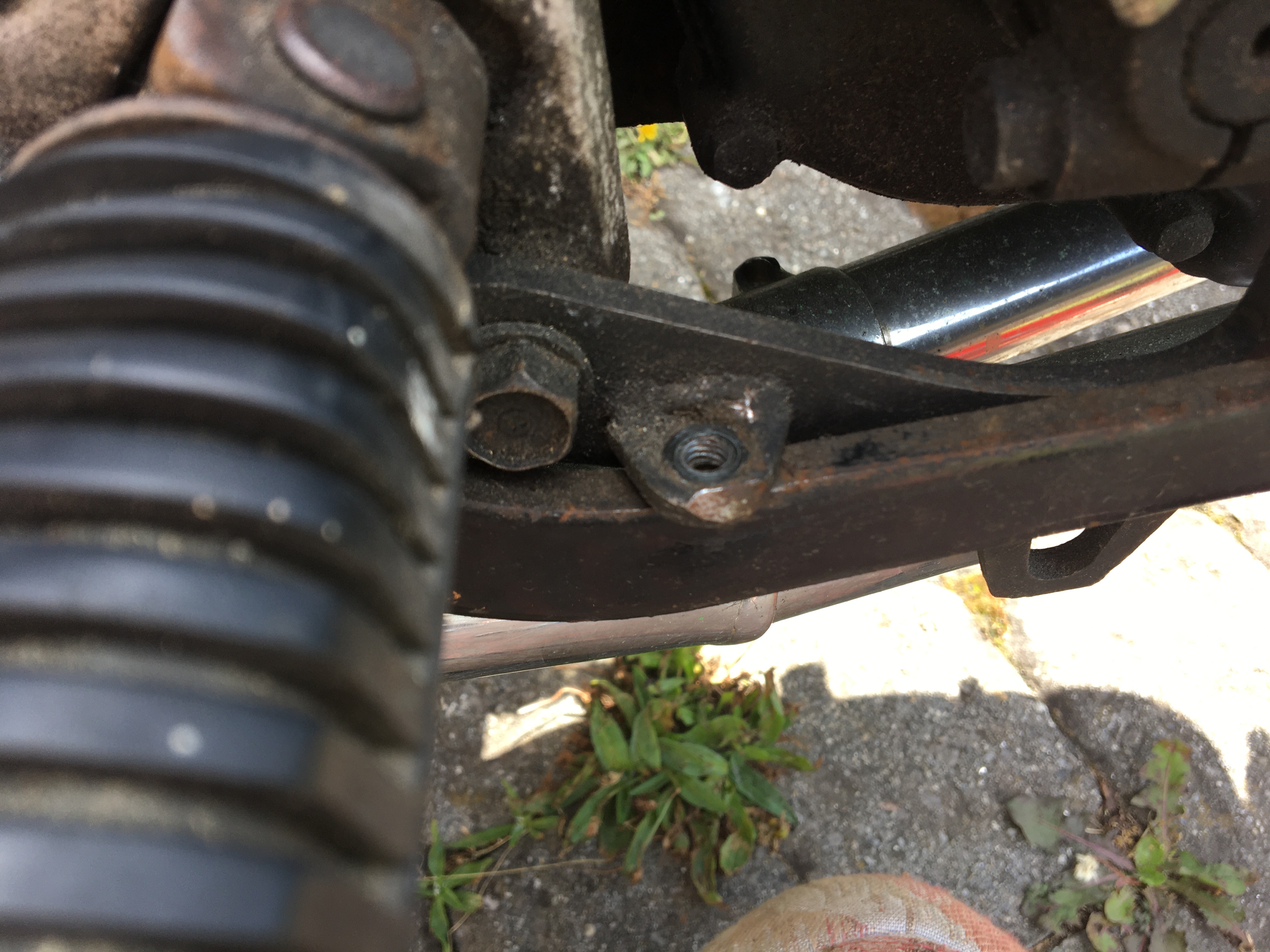
Here I have removed the original adjusting bolt and locknut which is too short to achieve the lower pedal I require.
Does anybody remember these small tins of Golden Virginia rolling tobacco? Back in the day my Father would roll his own cigarettes or ‘roll-ups’, these little tins were (and still are) very useful for storing bits and bobs. I think this tin and its contents must be at least 45 years old! This tin and another like it have sat in my tool shed wherever I have lived, and these tins were the first place I looked to see if I had anything suitable to use as an extended brake pedal stop/adjusting bolt.
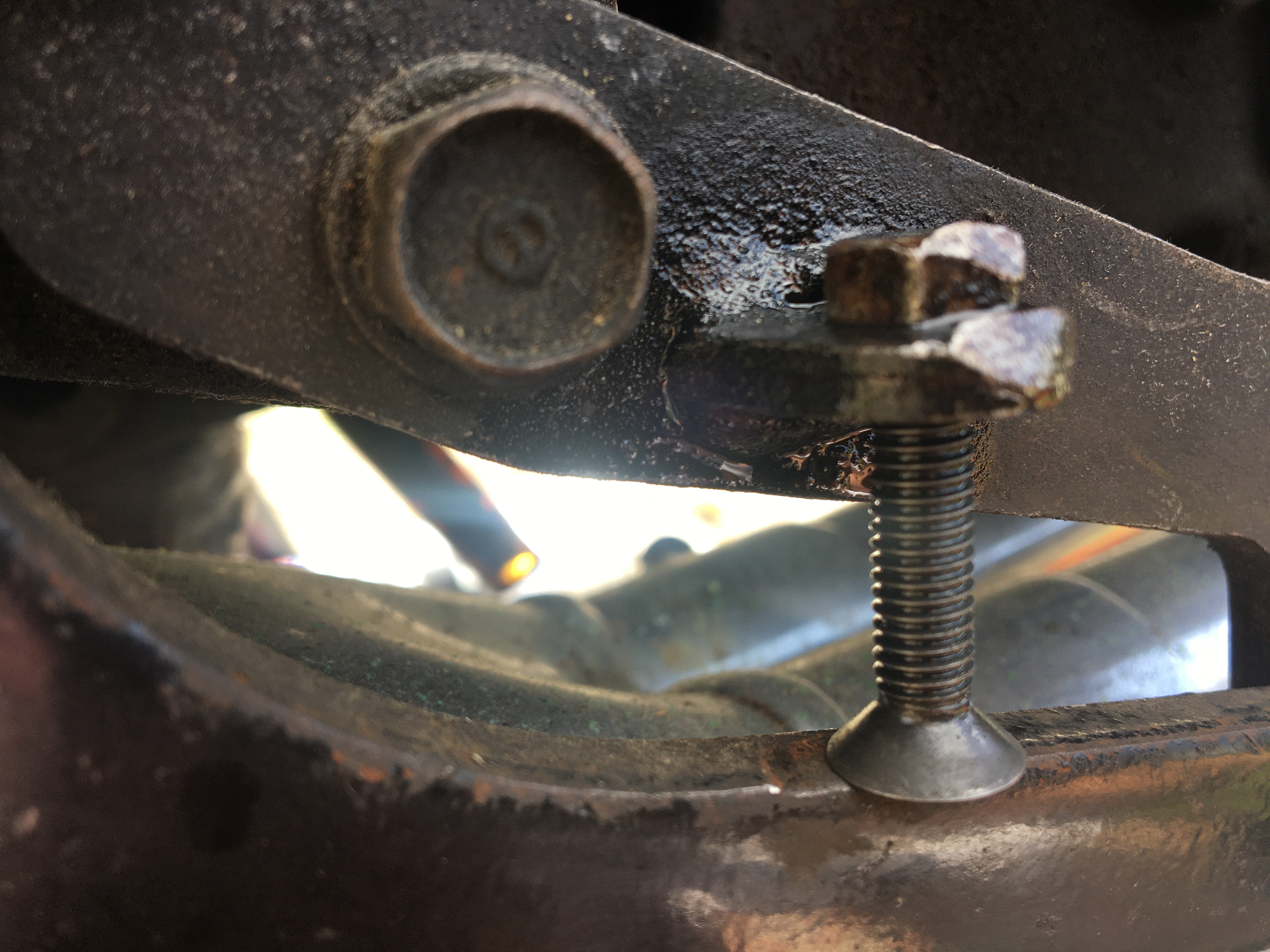
… And I found just the thing, a countersunk, socket headed high tensile setscrew about 10mm longer than the original bolt.
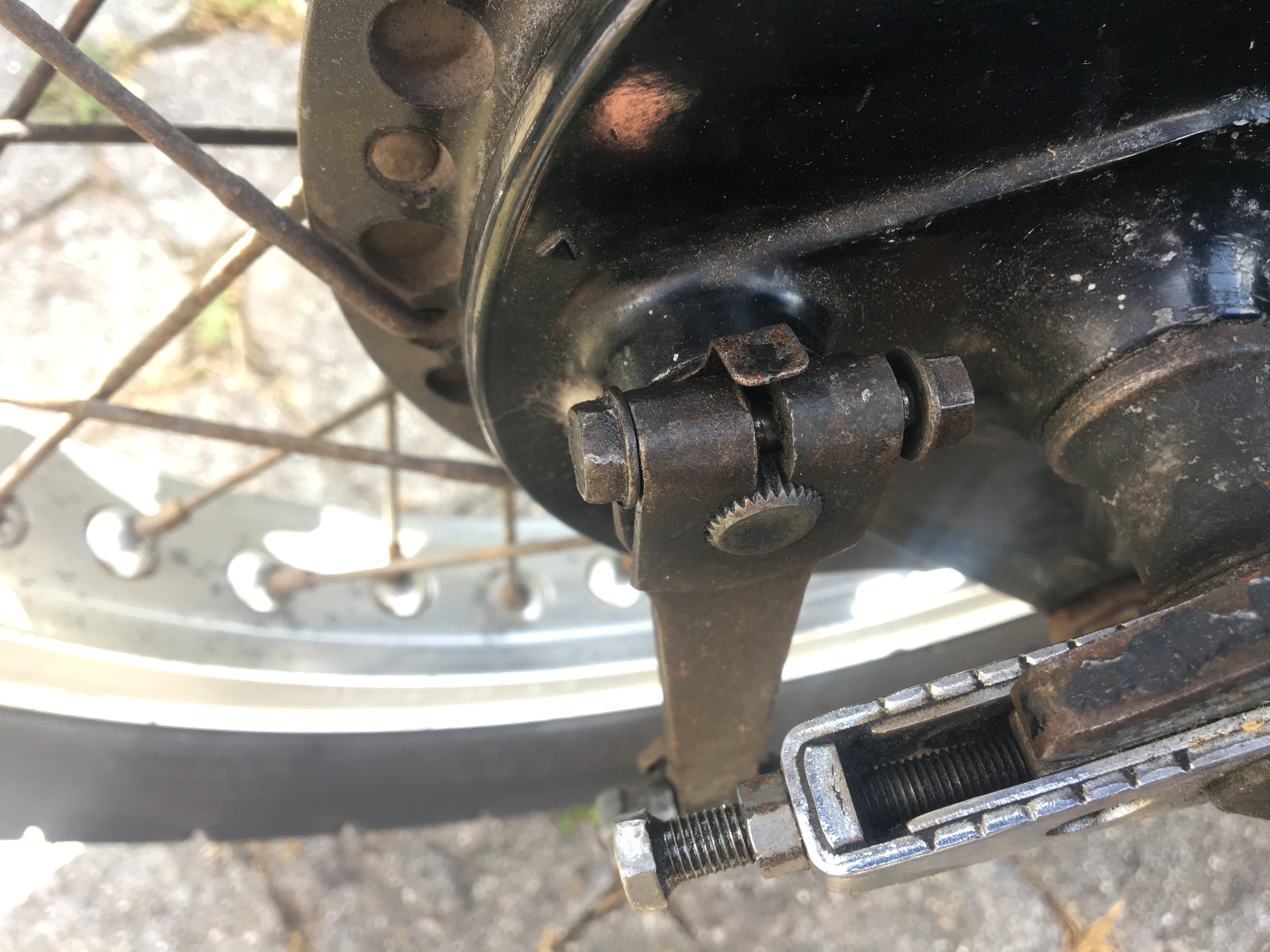
Having set the pedal at the desired/lower hight using the new stop screw, my attention now turned to re-adjusting the actual brake operation as my changes at the pedal/lever had upset the setting. The rear brake operating arm (12) is adjusted by the special nut/cam seen below …
The rear brake adjuster nut/cam
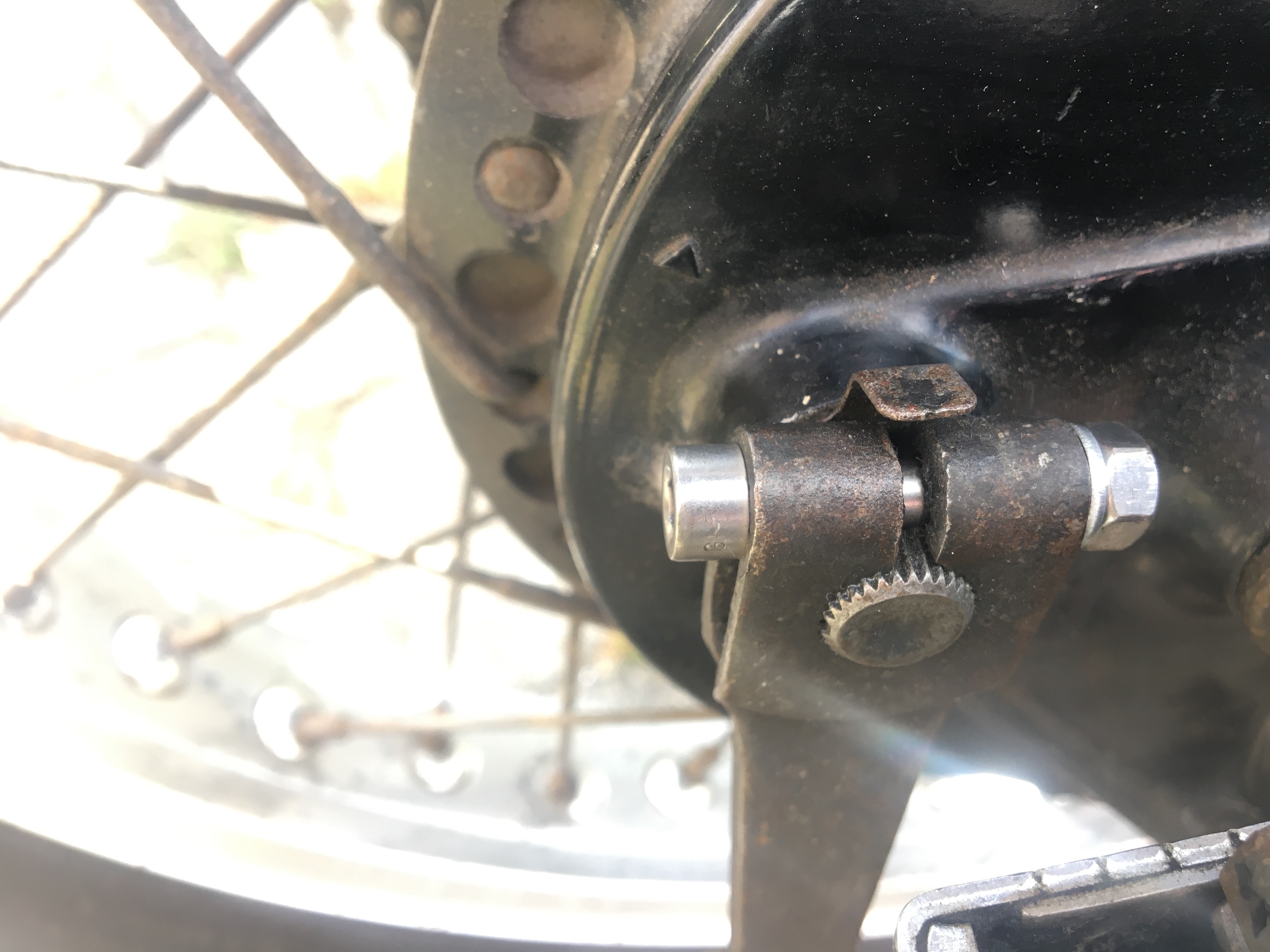
So, while adjusting the brake I noticed movement of the brake operating arm on its splined shaft, but when attempting to tighten the clamp bolt it was apparent that something was not right … (see below)
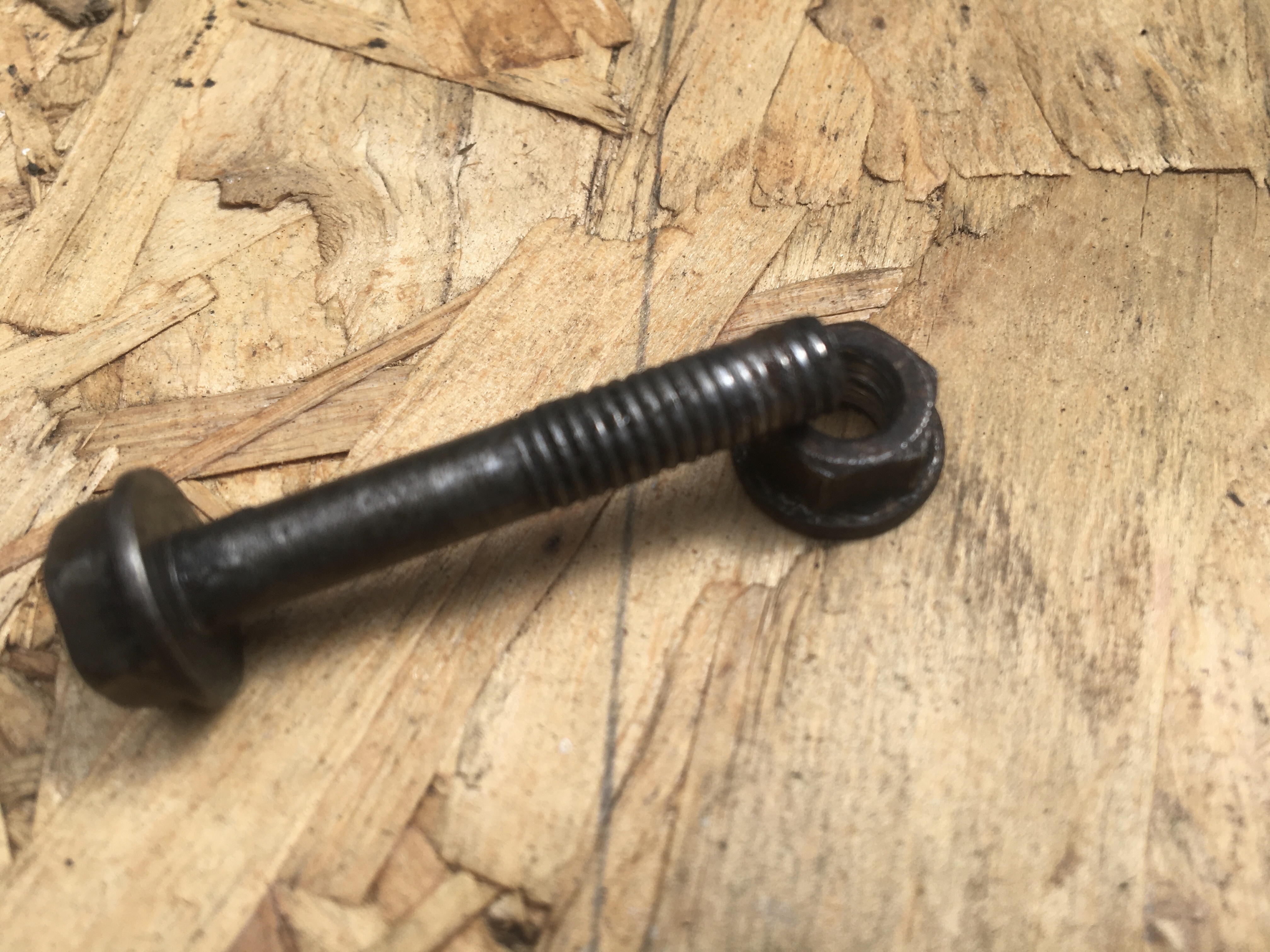
And here’s the clamp bolt & nut removed showing stripped bolt thread
So another rummage through the tobacco tin of useful bits and bobs produced a perfect length stainless steel cap screw, washer and nut – result!
And here it is fitted and tightened – job done!

The last step is to re-adjust the rear brake light switch. For some reason I forgot to take a picture of said switch and there is no image/diagram in the Haynes Manual. At some point, for continuity I will take a picture and edit this post.

While working under the bike on the rear brake etc, I noticed a missing exhaust clamp bolt. So another rummage through the ancient tobacco tin produced a perfect stainless steel bolt/washer and nylon nut (see below)
Another little job done and working towards this old bike’s first MOT test in 12 years … fingers crossed.

End of Part 6.

Thank you for reading.

Recap Part 2 Part 1 Part 3 Part 4 Part 5 Part 7

… And if you’ve just joined at Part 6, below is a little background to this story.

Motorcycling is in my blood [ RIP Dad – A Truly Great Father ] and because of motorcycles I’ve literally spilled many pints of blood [ Conscious Throughout ] My Dad passed the DNA and the bug to me in 1976 aged 15. My younger brother then aged 10 also caught the bug and eventually carried on the motorcycling tradition for far longer than myself. I rode on and off from age 15 to 40, all weathers, commuting on various ‘hack bikes’ while pampering and saving the main bike for dry (mainly) runs out for the sheer joy of riding. My brother recently bought a new 2023 Triumph 765 Street Triple R, a two wheeled sculpture if ever there was such a thing. The Street Triple was to join his stable of bikes alongside his classic Triumph Daytona 1200, and another classic, the Honda CB250 RSA you see below. The little Honda was his ‘hack bike’ back in the day, not used since 2010 and carefully stored, dry and covered in our Dad’s old garage. That garage is a shrine to our dear father, not really disturbed since his sad passing in 2016.

So the Street Triple needed room, the garage needs sorting but both my brother and I are dreading the day we have to disturb our Dad’s workshop and birthplace to so much of his woodwork creativity, and so many precious memories. The motorcycling bug never dies, although I myself have not ridden for over 20 years, the pull has always been there and watching the wonderful Allen Millyard‘s YouTube channel has fed my interest in the mean time, and when my brother suggested I take custody of his little classic Honda and get her back on the road I jumped at the chance!

… And Why ‘Zen’?

There’s a stand out section for me in the book Zen and the Art of Motorcycle Maintenance, and it is the part where the author describes making, or proposing to make makeshift ‘shims’ for his friends John and Sylvia Sutherland’s new and exclusively dealer serviced BMW motorcycle. Pirsig tries to explain how shims made from a discarded Coca-Cola can would be perfectly adequate and functionally identical to those fitted by the BMW Dealer’s mechanics at exorbitant costs. John Sutherland could not see this or be convinced, so programmed was he that only the main dealer has the expertise, equipment and materials to carry out such a task.

“In the book, the narrator describes the “romantic” approach to life of his friend, John Sutherland, who chooses not to learn how to maintain his expensive new motorcycle. John simply hopes for the best with his bike, and when problems do occur he often becomes frustrated and is forced to rely on professional mechanics to repair it. In contrast, the “classical” narrator has an older motorcycle which he is usually able to diagnose and repair himself through the use of rational problem-solving skills.”

Zen and the Art of DIY Motorcycle Maintenance #05 …

New Grips & Twist Grip Throttle Tube …

A 40 year old Classic Honda Motorcycle. No road tax, no MOT, cheap to run, cheap to insure – an answer to the Cost Of Living Crisis?

What follows is a pictorial account with description of the progress of that restoration – Part 5 New Grips …

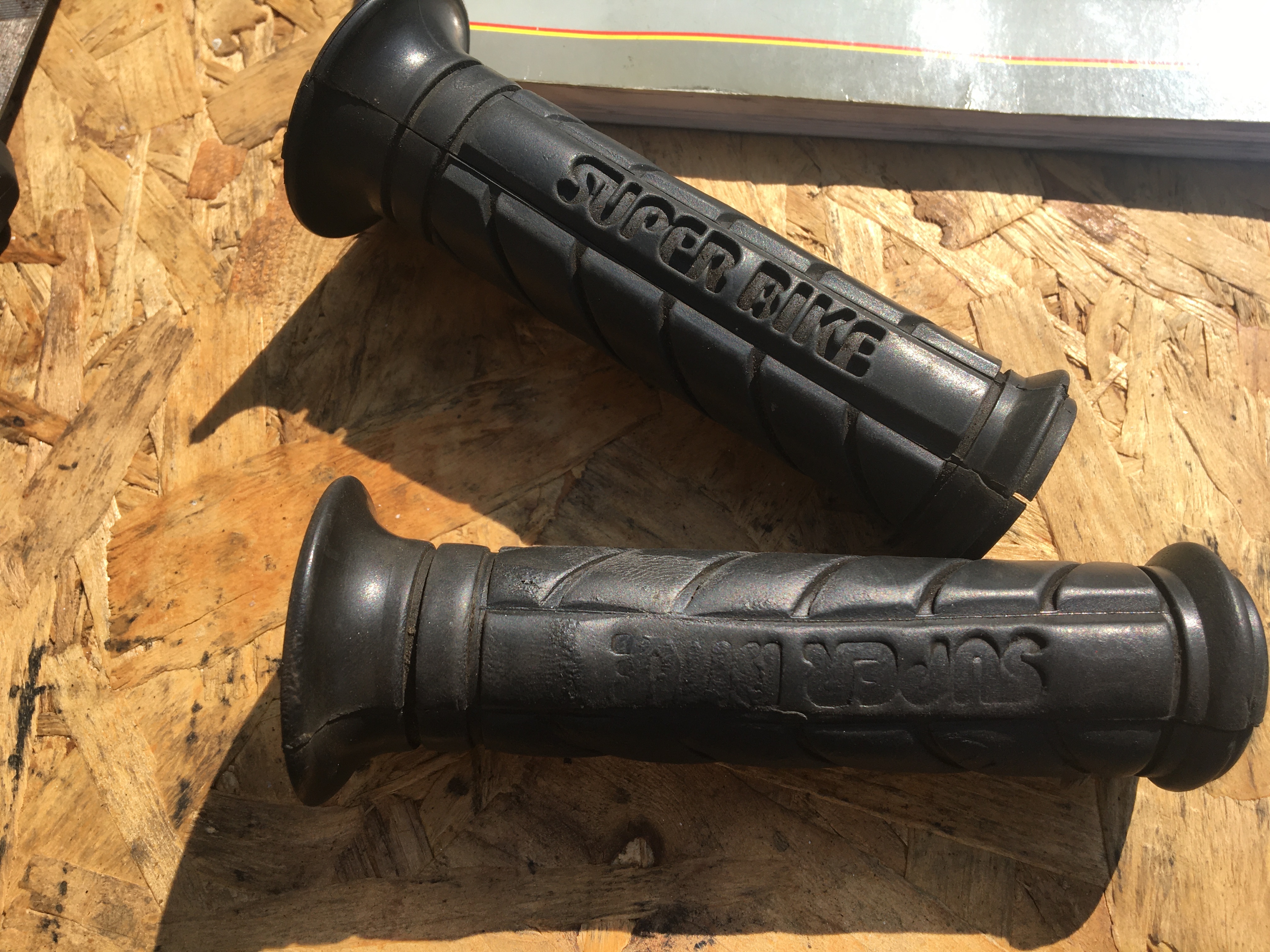
In the big box of new parts from David Silver Spares ordered by my brother, were two new original Honda handlebar grips. So these very worn, very old ‘SB’ Super Bike? grips had to go.
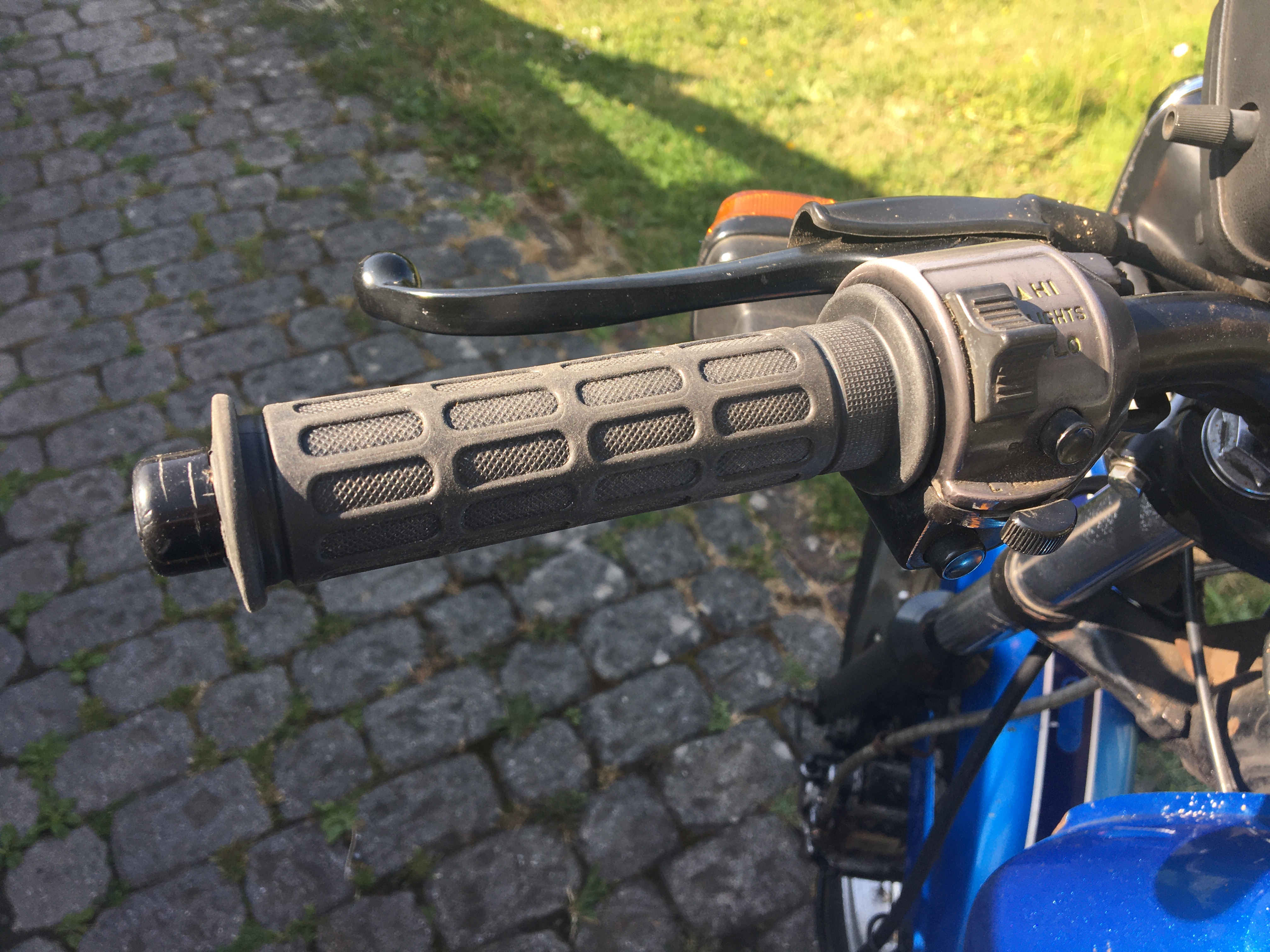
Here is the new Original Honda grip on the clutch side
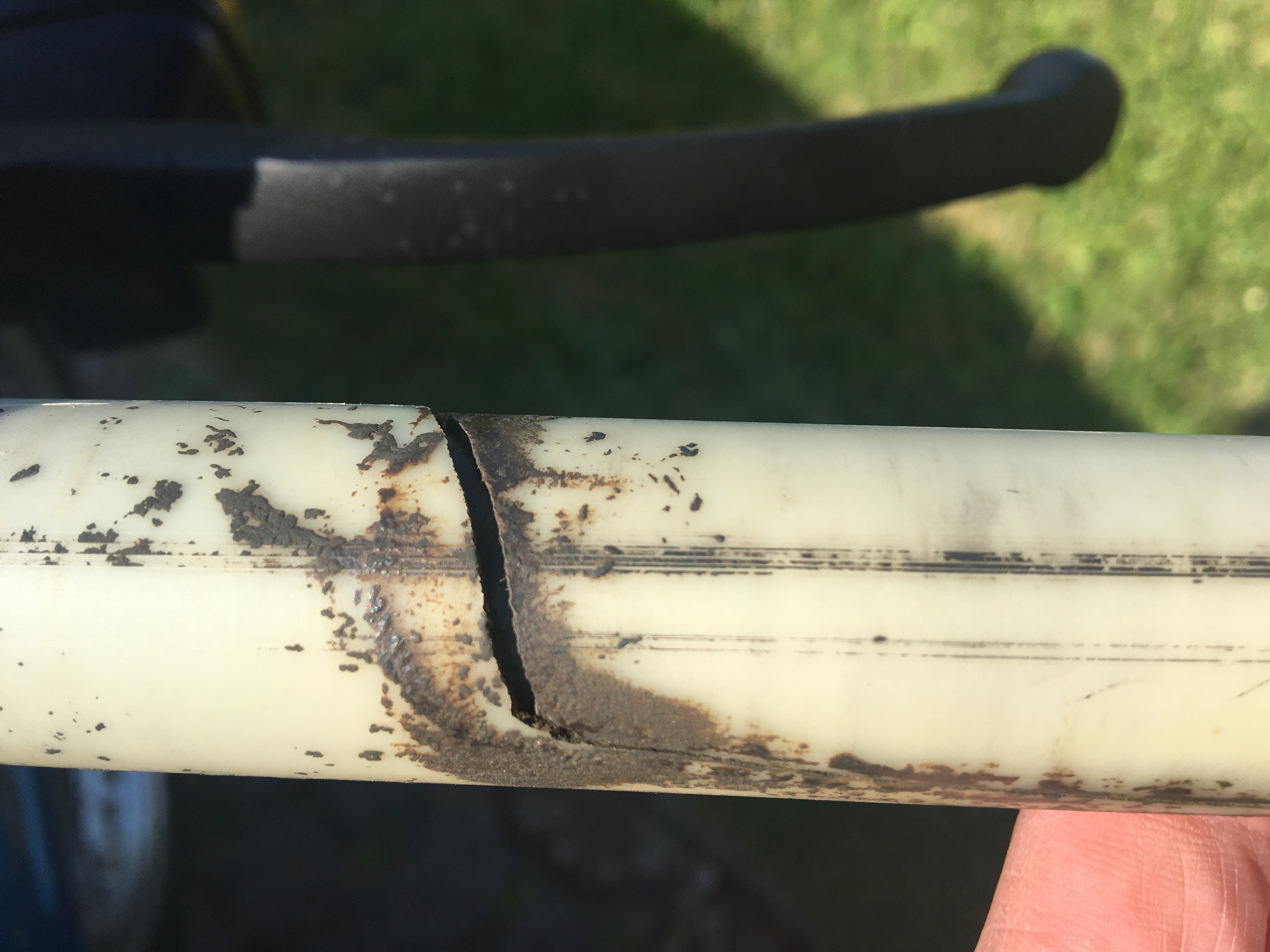
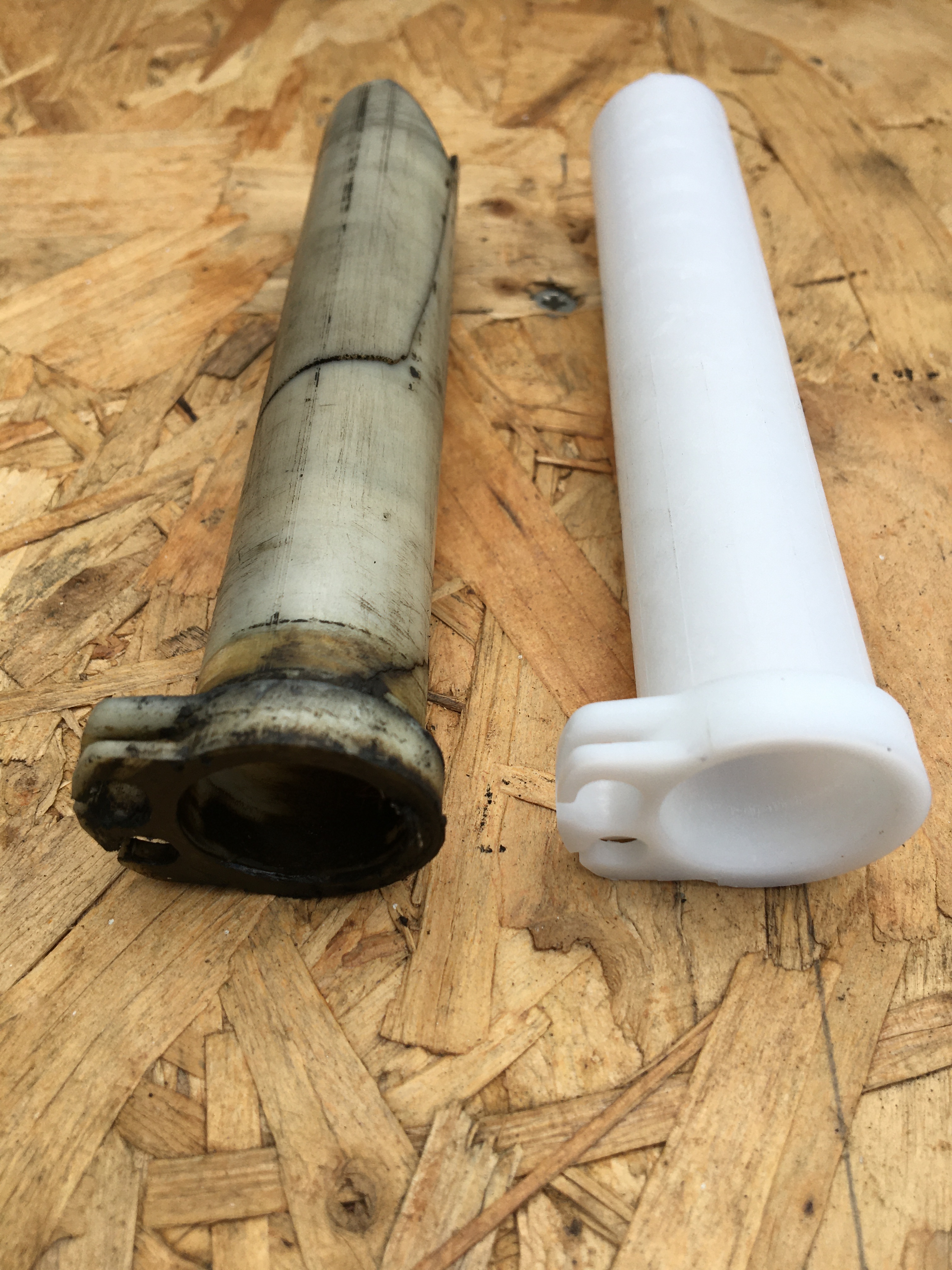
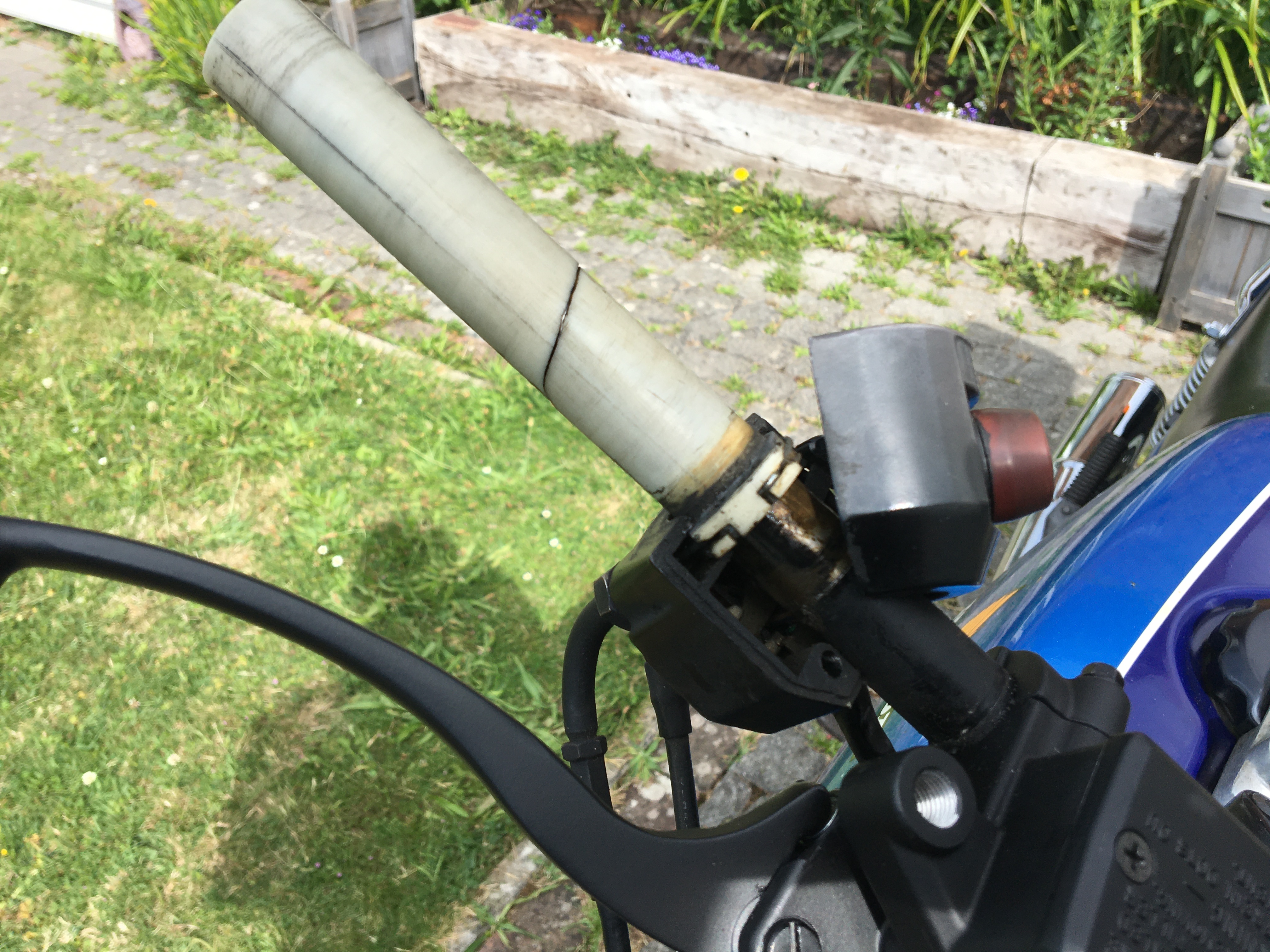
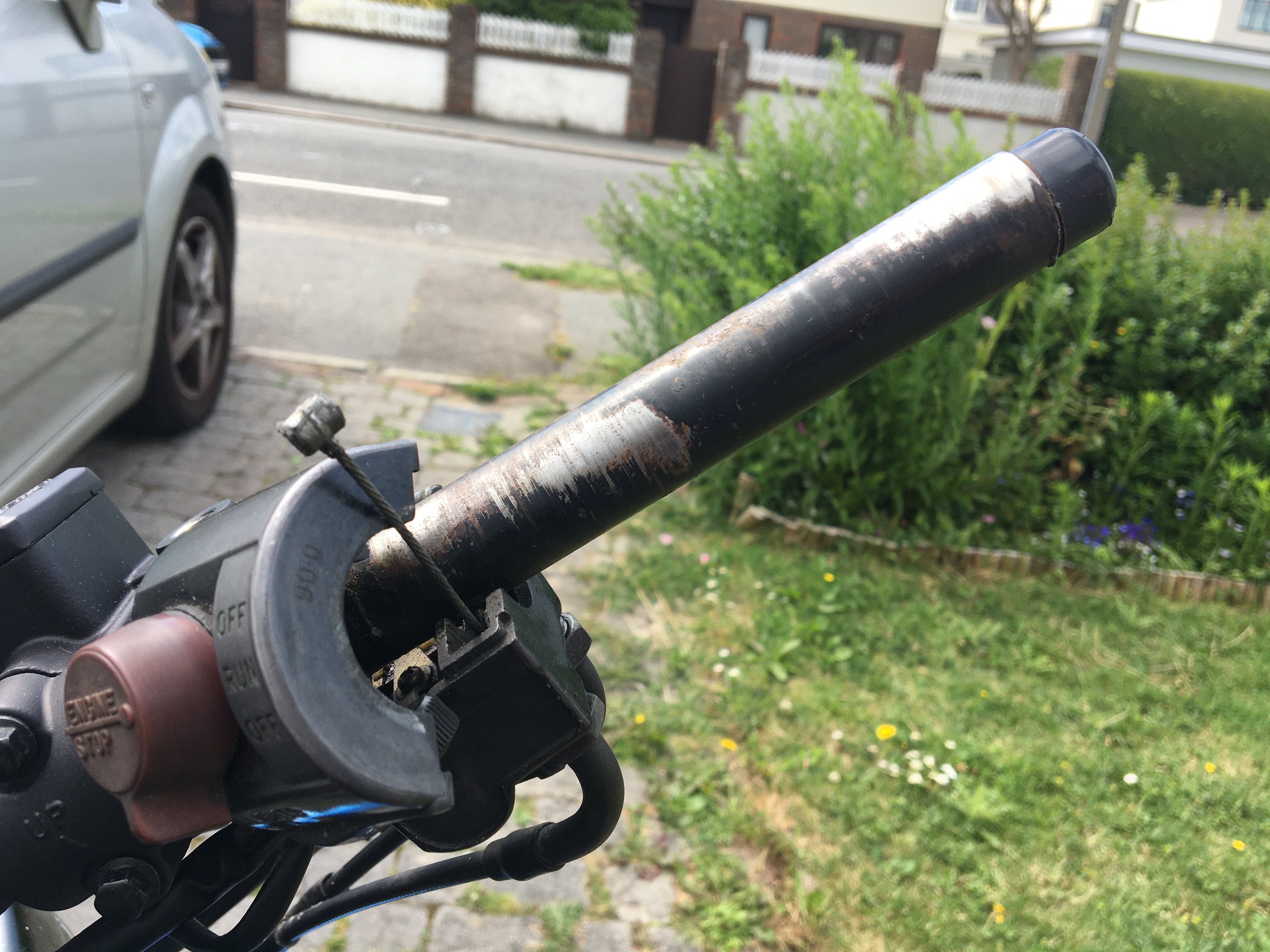
But .. look at the state of the throttle tube once the grip (which was basically holding it together) was removed …

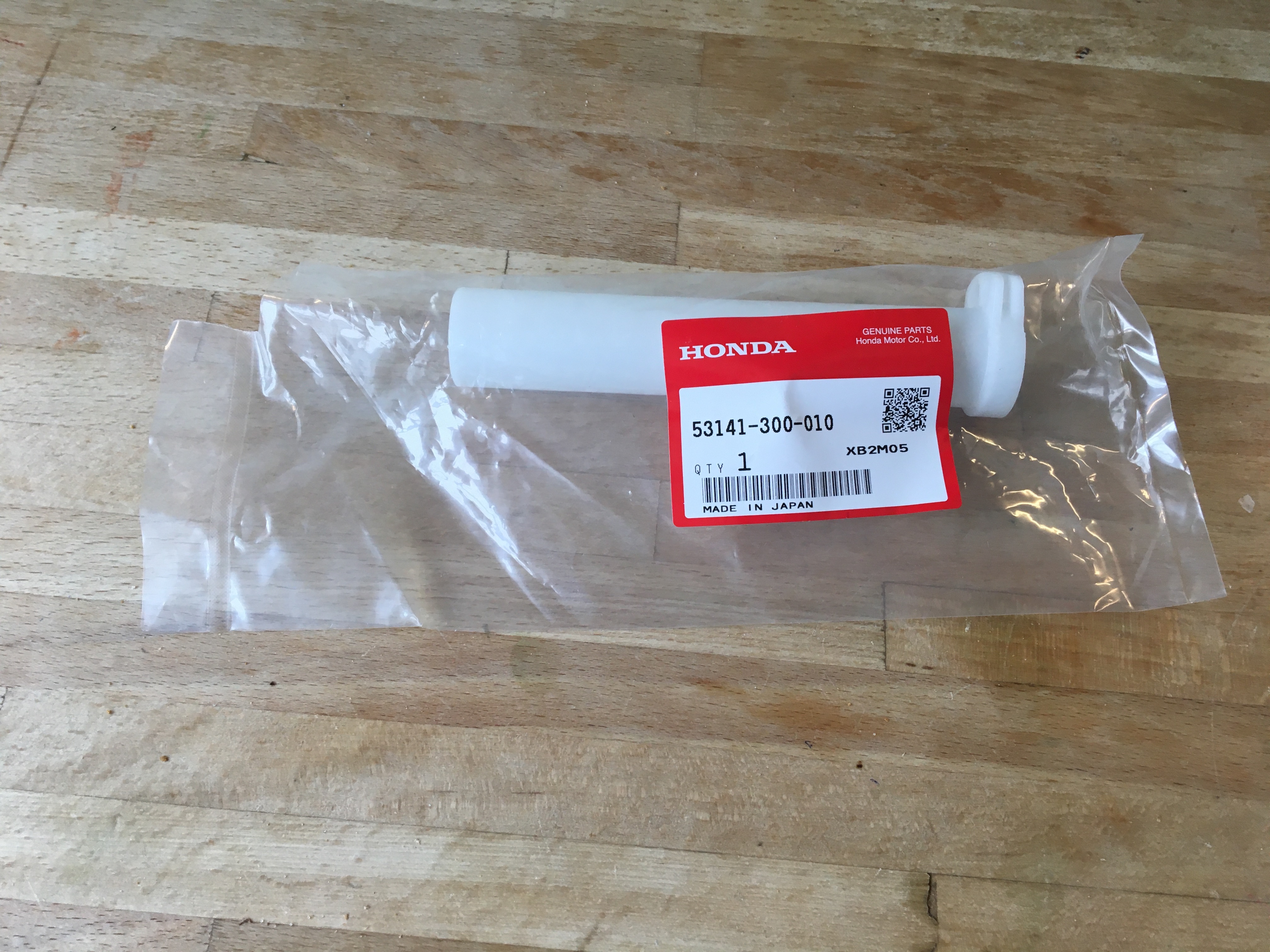
So, onto the David Silver Spares website to order a genuine Honda “Throttle Pipe
As can be seen – it really did need changing though the damage was hidden under the grip rubber.
2 screws hold the switch gear assembly together, these are removed from the underside (different lengths so remember) the top half can then be prised off but take care not to strain the wiring.
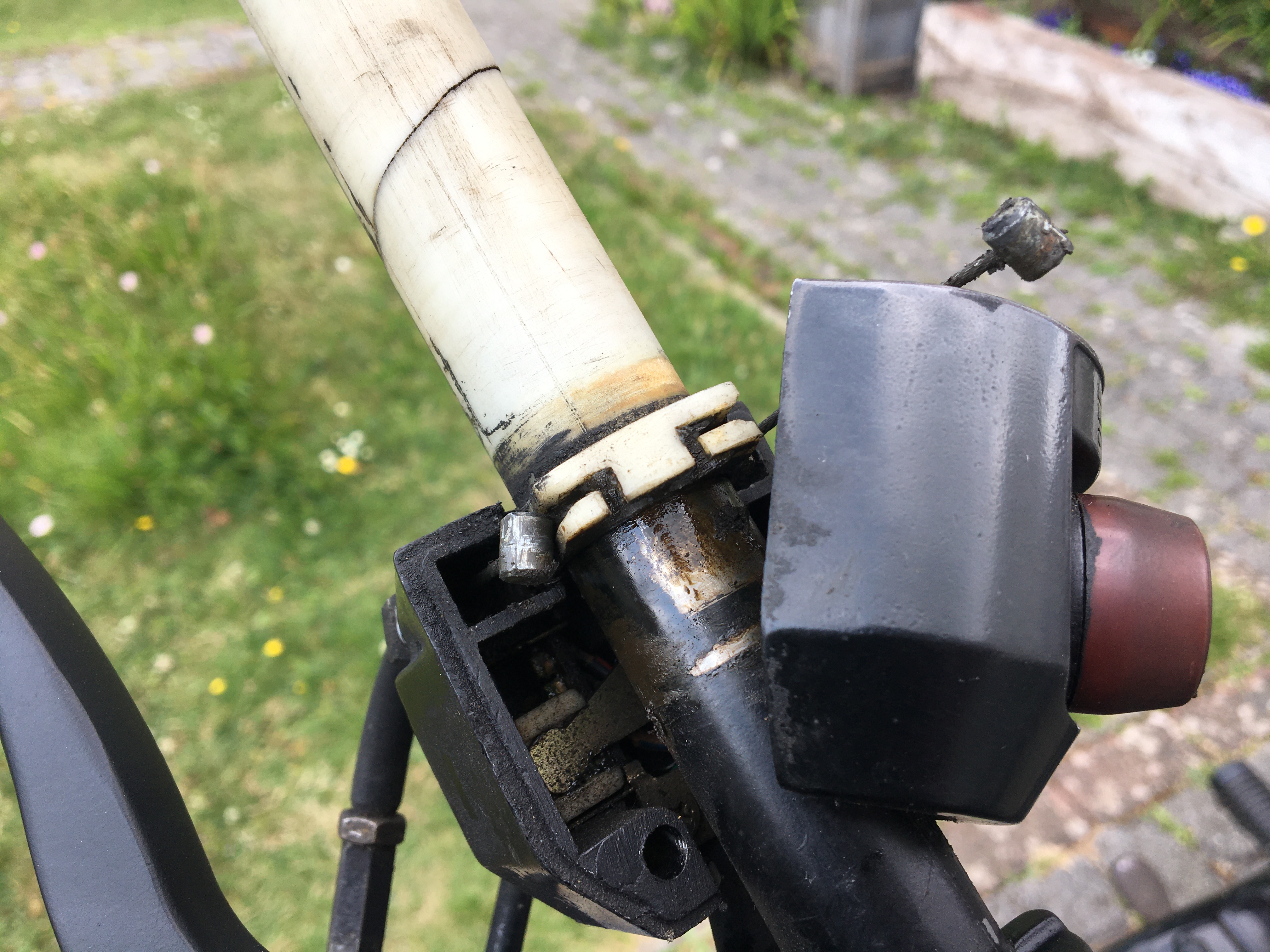
To release the two throttle cables it was necessary to release the cable from the carburettor again (see part 4). This gives enough slack to unhook the cables from the throttle pipe. It’s a fiddly job without completely disconnecting the switchgear cables, but doable with a little perserverance.
The two switchgear halves can be hooked up out of the way to get good access to the handlebar itself which was in need of some attention.
The handle bar was originally painted black. We’re not sure if that is standard original finish? Anyway, the paint had mainly worn off due to years of throttle operation and with the ingress of water that bare metal had gone rusty.
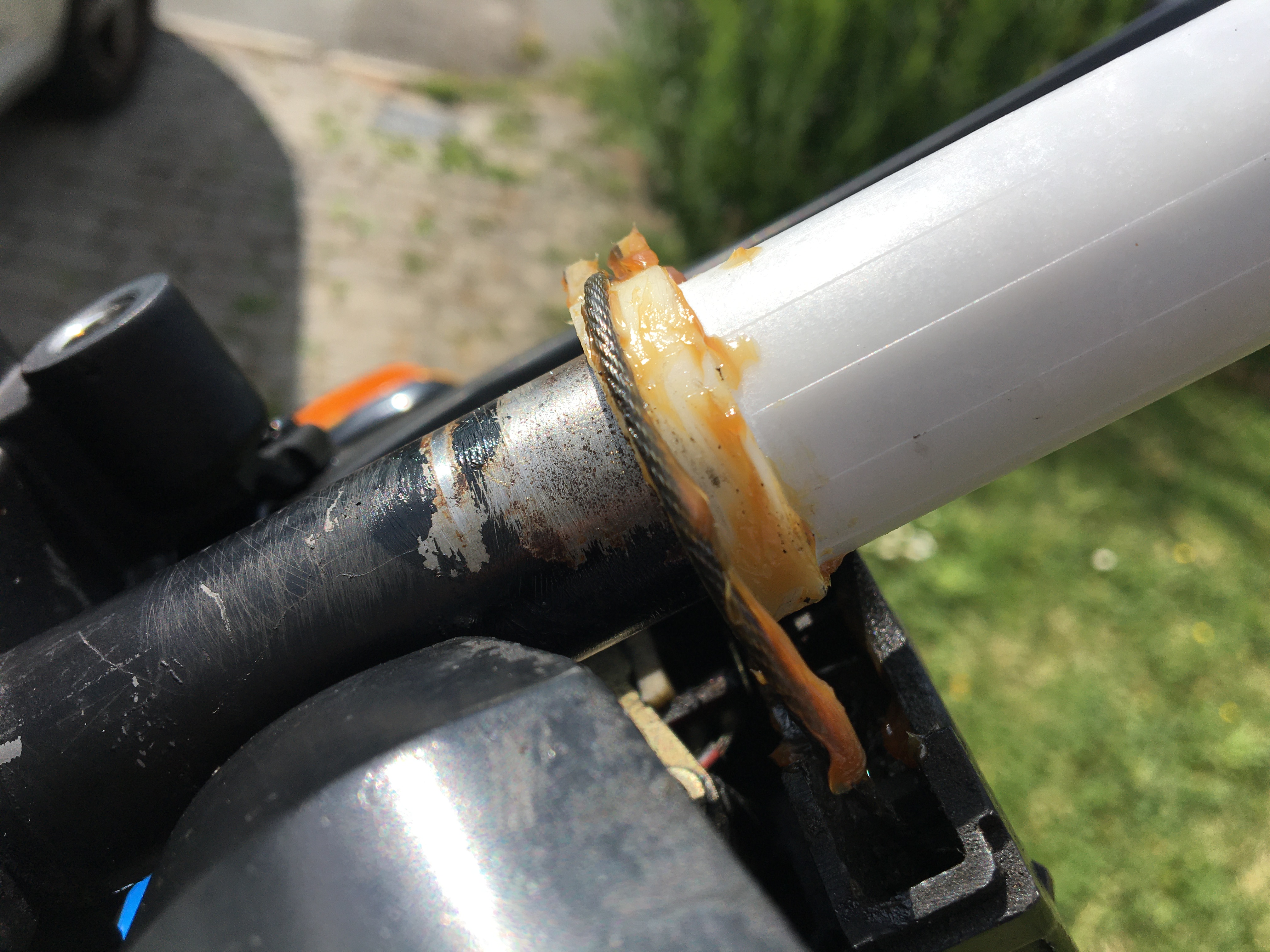
The handlebar in the process of cleaning with fine emery cloth to remove the rust. Rightly or wrongly I decided to smear the whole exposed metal surface where the throttle pipe would be rotating with a good quality grease. No idea if this is good/bad practice but my thinking is that the grease will prevent ingress of water, protect the bare metal and lubricate the moving throttle pipe as it turns.
… And here’s the new throttle pipe with ‘close throttle’ cable in place
And from the other side
And with the switchgear back in place and secure and the new Honda twist grip rubber fitted.
So, she’s pretty much ready to go! Starts 2nd kick (I need more practice) all electrics are working, lights, indicators, horn, both brake lights! I’ve checked the chain tension, tyre pressures, mirrors back on (apologies again for the background clutter but this is basically the only work space I have for the complete bike) Once she’s legally roadworthy I’ll get some better pictures.

A word on the ‘legally roadworthy’ bit – The bike is 40 years old so technically eligible for (here in the UK at least) the taxation class ‘Historic Vehicle’. My brother and I were unsure how this all worked so I e-mailed the DVLA to enquire and I’ve posted their reply below …

We appreciate that you have taken the time to contact us in relation to this matter.​
 
It may help if I explain, the taxation class Historic Vehicle is a 40 year rolling exemption and currently applies to vehicles manufactured before 1st January 1983.
If this isn’t recorded on the V5C Registration Certificate but the vehicle was manufactured prior to this date, you will need to produce dating evidence and submit the application to DVLA, Swansea, SA99 1BF.
The following documentation will need to be submitted:
– V5C Registration Certificate
– V62 Application for a registration certificate if you are not in possession of the V5C* (You will need the VIN/Chassis Number to complete the application)
– V10 Tax Application form
– valid MOT Certificate (if applicable) or V112 ‘Exemption from MOT testing’ form
– Dating evidence
*Please note that there is a £25 charge if a V62 is completed. This will need to be included by cheque or postal order.
You should write ‘Historic’ in the change to taxation class field in section (*) of the V5C and sign section 8 (Delete if new V5C).
Acceptable dating evidence can be obtained from:
– an extract from the manufacturer/factory record – these will have the chassis number of the vehicle against the month and year of production*
– an extract from the ‘Glasses guide’ – which is a comprehensive guide on production dates and includes chassis numbers.
– a dating letter that is accompanied by an extract from or references the “Trader Handbook”* An extract from the Trader handbook alone is not acceptable.
*A certified copy of the factory record (with the embedded stamp) will be acceptable only from the British Motor Industry Heritage Trust (BMIHT).
The vehicle will be taxed within 10 working days. This can be checked at: https://www.gov.uk/check-vehicle-tax
Vehicles manufactured more than 40 years ago are exempt from MOT testing.
Please be aware that it is the keeper or driver of the vehicle’s responsibility for ensuring the vehicle is in a road worthy condition and safe to be driven on the road.
If you pay your tax via Direct Debit it will be cancelled automatically and future payments will be stopped when we receive notification that you have changed your vehicle tax class.
Please also note that there is a 10% surcharge on 6 monthly vehicle tax renewals (5% for 6 monthly Direct Debit) that is not refundable.
More information on the Historic vehicle tax class can be found on information leaflet INF34 Taxing Historic Vehicles.
All our services are operating within normal turnaround times as paper applications are being processed within 3 to 4 weeks.
Please allow 4 weeks for your new documents to be sent to you if applying by post. Please do not call us within those 4 weeks as your application will be processing and we will not be able to provide further information.
Information regarding any DVLA services can be found at: https://www.gov.uk/guidance/dvla-services-update
Form V62 can be downloaded from www.gov.uk/vehicle-registration-certificate-v5c-log-book or obtained from a Post Office® that deals with vehicle tax.
Form V10 can be downloaded from www.gov.uk/car-tax-disc-vehicle-licence-using-form-v10 or obtained from a Post Office® that deals with vehicle tax.
Form V112 can be downloaded from www.gov.uk/getting-an-mot/vehicles-exempt-from-mot
 
I hope this information is of assistance to you and answers your entire enquiry.

So, it appears that the bike will not actually qualify for free road tax and become MOT exempt until 2024.

Next step is an MOT test which is now booked with The Motorcycle Man a few miles from where I live. Fingers crossed she passes. Then it’s apply for road tax, hopefully just 6 months and from then on road tax exempt.

I will of course update the story in due course.

End of Part 5.

Thank you for reading.

Recap Part 2 Part 1 Part 3 Part 4 Part 6 Part 7

… And if you’ve just joined at Part 5, below is a little background to this story.

Motorcycling is in my blood [ RIP Dad – A Truly Great Father ] and because of motorcycles I’ve literally spilled many pints of blood [ Conscious Throughout ] My Dad passed the DNA and the bug to me in 1976 aged 15. My younger brother then aged 10 also caught the bug and eventually carried on the motorcycling tradition for far longer than myself. I rode on and off from age 15 to 40, all weathers, commuting on various ‘hack bikes’ while pampering and saving the main bike for dry (mainly) runs out for the sheer joy of riding. My brother recently bought a new 2023 Triumph 765 Street Triple R, a two wheeled sculpture if ever there was such a thing. The Street Triple was to join his stable of bikes alongside his classic Triumph Daytona 1200, and another classic, the Honda CB250 RSA you see below. The little Honda was his ‘hack bike’ back in the day, not used since 2010 and carefully stored, dry and covered in our Dad’s old garage. That garage is a shrine to our dear father, not really disturbed since his sad passing in 2016.

So the Street Triple needed room, the garage needs sorting but both my brother and I are dreading the day we have to disturb our Dad’s workshop and birthplace to so much of his woodwork creativity, and so many precious memories. The motorcycling bug never dies, although I myself have not ridden for over 20 years, the pull has always been there and watching the wonderful Allen Millyard‘s YouTube channel has fed my interest in the mean time, and when my brother suggested I take custody of his little classic Honda and get her back on the road I jumped at the chance!

… And Why ‘Zen’?

There’s a stand out section for me in the book Zen and the Art of Motorcycle Maintenance, and it is the part where the author describes making, or proposing to make makeshift ‘shims’ for his friends John and Sylvia Sutherland’s new and exclusively dealer serviced BMW motorcycle. Pirsig tries to explain how shims made from a discarded Coca-Cola can would be perfectly adequate and functionally identical to those fitted by the BMW Dealer’s mechanics at exorbitant costs. John Sutherland could not see this or be convinced, so programmed was he that only the main dealer has the expertise, equipment and materials to carry out such a task.

“In the book, the narrator describes the “romantic” approach to life of his friend, John Sutherland, who chooses not to learn how to maintain his expensive new motorcycle. John simply hopes for the best with his bike, and when problems do occur he often becomes frustrated and is forced to rely on professional mechanics to repair it. In contrast, the “classical” narrator has an older motorcycle which he is usually able to diagnose and repair himself through the use of rational problem-solving skills.”

Recap Part 2 Part 1 Part 3 Part 4 Part 6 Part 7

Zen and the Art of DIY Motorcycle Maintenance #04 …

Carburettor Strip and Clean …

A 40 year old Classic Honda Motorcycle. No road tax, no MOT, cheap to run, cheap to insure – an answer to the Cost Of Living Crisis?

What follows is a pictorial account with description of the progress of that restoration – Part 4 Carb strip and clean …

For some reason I have very few detailed pictures of this process which basically consisted of removing the bike’s side panels/seat/petrol tank. Disconnecting both the (push/pull) throttle cables, the choke cable, float drain tube, inlet & air box rubber jubilee clips. To make more room I also decided to remove the air box which in turn means removing the battery to gain access to 2x air box bolts.

The carburettor in situ …
… Side panels, seat and tank off
This is the air box with cover off and filter out …
Battery out to gain access to 2x bolts securing air box
… and the air box off complete with filter
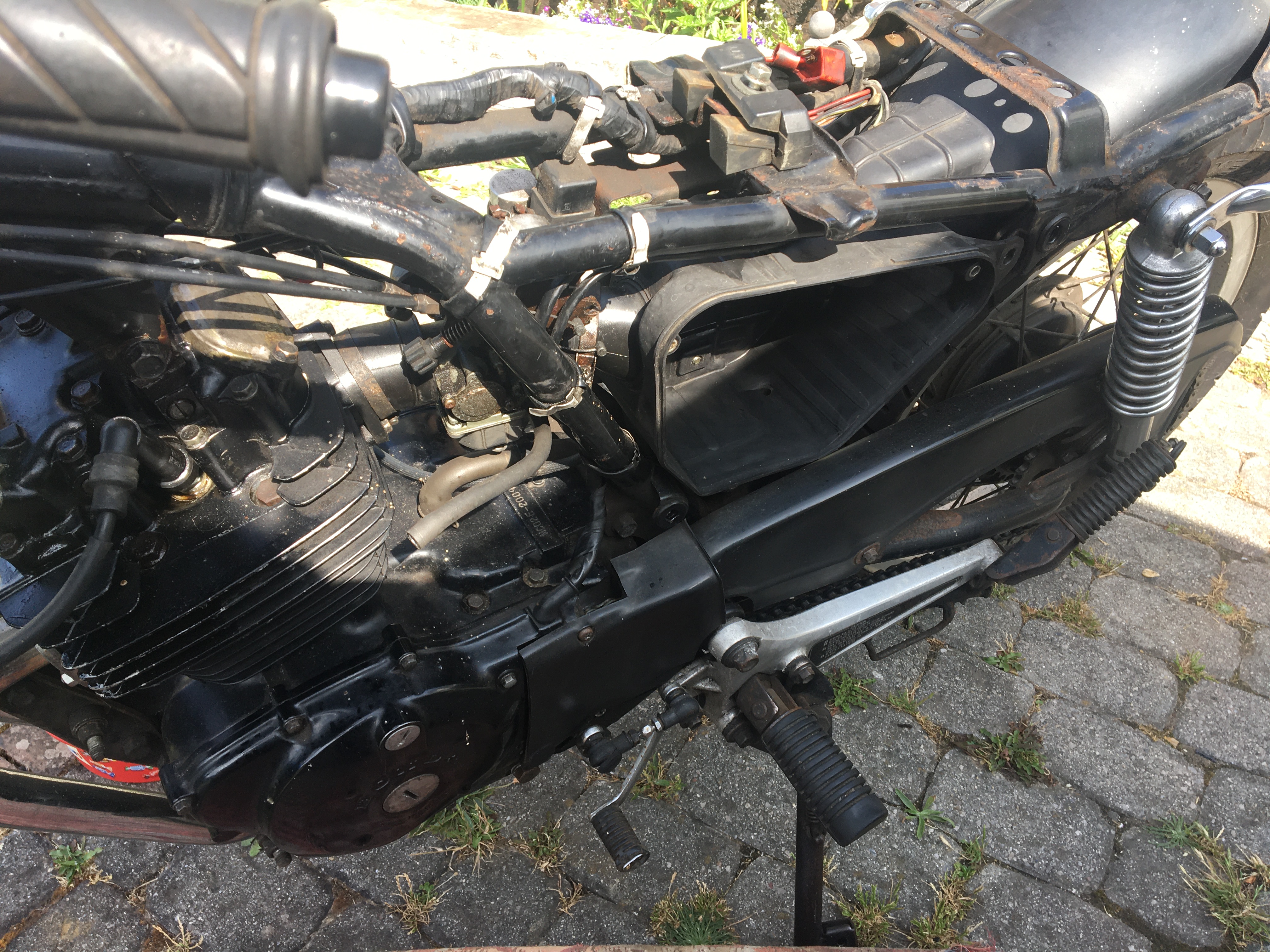
NS view with carb, air box and battery out
OS view
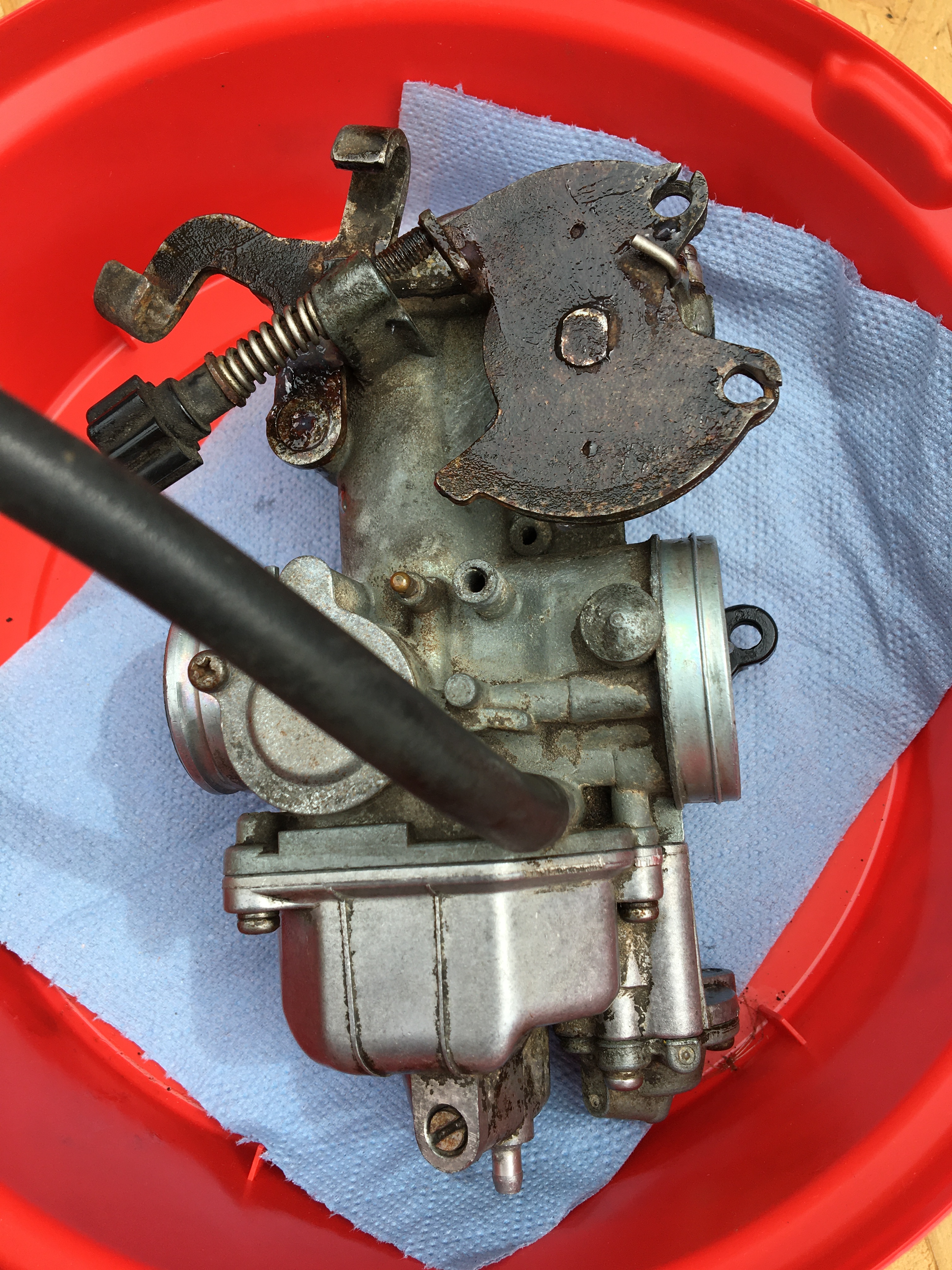
Carb NS after initial clean showing throttle quadrant/cam and idle adjusting screw, fuel feed pipe
OS view showing choke quadrant and corroded accelerator pump rod/bellows

I didn’t do too much to the top end of the carb except check the slide operation and inspect through the inlet/outlet openings. I concentrated on the bottom end, mainly float, float needle valve, main jet, etc. The float was contaminated with some sediment which came off easily with a a soft brass wire brush and old tooth brush. The main issue was the accelerator pump operating rod which was seized and quite corroded but cleaned up well with a little gentle work using the brass wire brush, fine wet & dry paper and copious amounts of carb cleaner spray.

Page 82 of the Haynes Manual showing an exploded view of the carburettor. My main concern was part #61 which has integral operating rod that had become corroded.
The accelerator pump diaphragm and operating rod which cleaned up nicely and operates well now
Refitting the carb is basically a reversal of all the above steps. Here is the top view of the carb refitted and all cables reconnected, the push/pull throttle cables on the left and the choke cable right.

Next job was the battery, we’d ordered a new battery from David Silver Spares

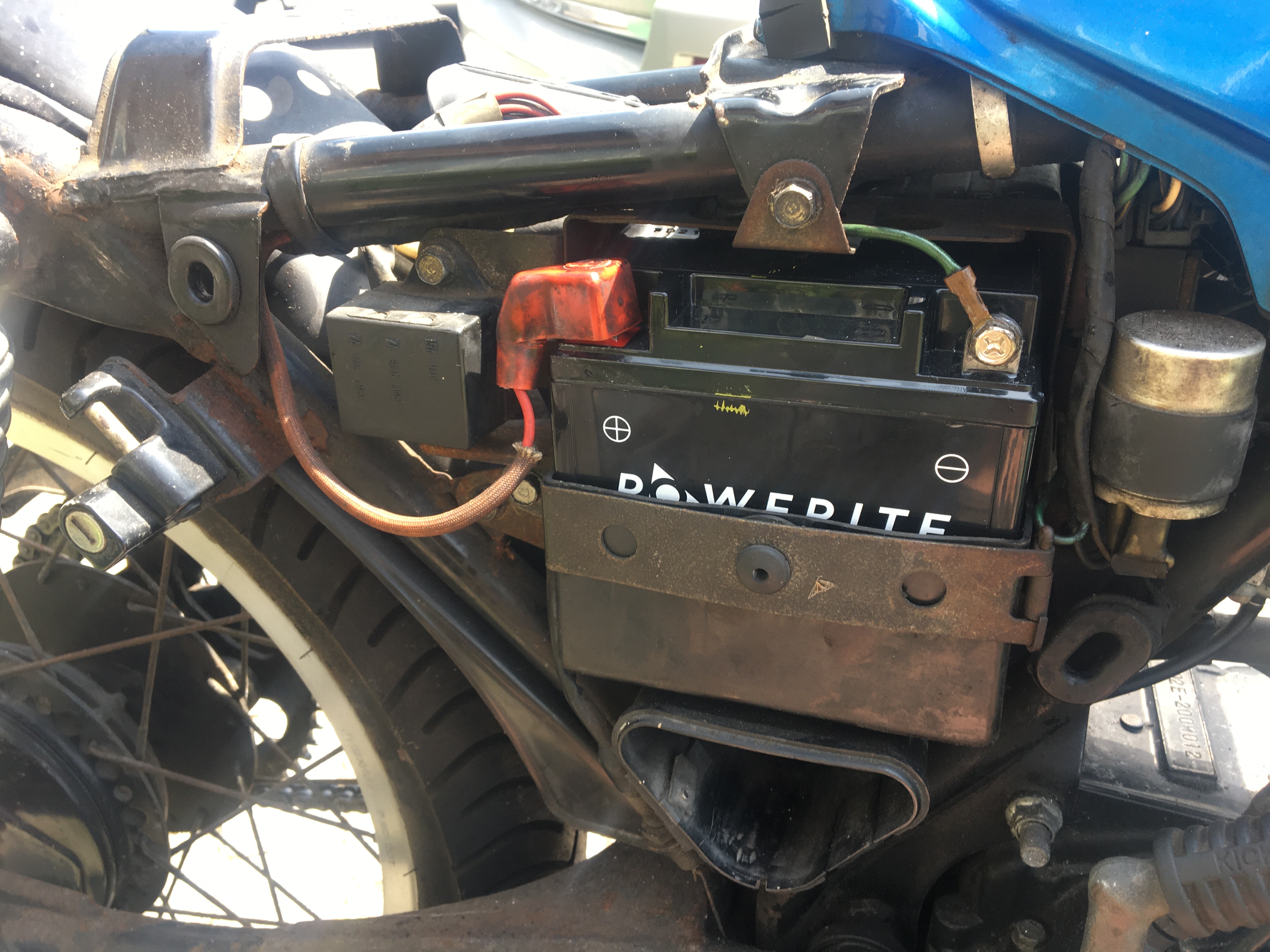
New battery fitted and connected
… And a quick multimeter check displaying a healthy 12.65 volts out of the box!

Before refitting the petrol tank I drained the old stale petrol, removed/inspected/replaced the tap and took the tank for a ride …

… for 5 litres of E5 which my local filling station still keeps on one pump

Which left only one thing to do … and after 4 kicks on the Kick Starter, she fired into life for the first time since 2011

First Start walk around

End of Part 4.

Thank you for reading.

Recap Part 2 Part 1 Part 3 Part 5 Part 6 Part 7

… And if you’ve just joined at Part 4, below is a little background to this story.

Motorcycling is in my blood [ RIP Dad – A Truly Great Father ] and because of motorcycles I’ve literally spilled many pints of blood [ Conscious Throughout ] My Dad passed the DNA and the bug to me in 1976 aged 15. My younger brother then aged 10 also caught the bug and eventually carried on the motorcycling tradition for far longer than myself. I rode on and off from age 15 to 40, all weathers, commuting on various ‘hack bikes’ while pampering and saving the main bike for dry (mainly) runs out for the sheer joy of riding. My brother recently bought a new 2023 Triumph 765 Street Triple R, a two wheeled sculpture if ever there was such a thing. The Street Triple was to join his stable of bikes alongside his classic Triumph Daytona 1200, and another classic, the Honda CB250 RSA you see below. The little Honda was his ‘hack bike’ back in the day, not used since 2010 and carefully stored, dry and covered in our Dad’s old garage. That garage is a shrine to our dear father, not really disturbed since his sad passing in 2016.

So the Street Triple needed room, the garage needs sorting but both my brother and I are dreading the day we have to disturb our Dad’s workshop and birthplace to so much of his woodwork creativity, and so many precious memories. The motorcycling bug never dies, although I myself have not ridden for over 20 years, the pull has always been there and watching the wonderful Allen Millyard‘s YouTube channel has fed my interest in the mean time, and when my brother suggested I take custody of his little classic Honda and get her back on the road I jumped at the chance!

… And Why ‘Zen’?

There’s a stand out section for me in the book Zen and the Art of Motorcycle Maintenance, and it is the part where the author describes making, or proposing to make makeshift ‘shims’ for his friends John and Sylvia Sutherland’s new and exclusively dealer serviced BMW motorcycle. Pirsig tries to explain how shims made from a discarded Coca-Cola can would be perfectly adequate and functionally identical to those fitted by the BMW Dealer’s mechanics at exorbitant costs. John Sutherland could not see this or be convinced, so programmed was he that only the main dealer has the expertise, equipment and materials to carry out such a task.

“In the book, the narrator describes the “romantic” approach to life of his friend, John Sutherland, who chooses not to learn how to maintain his expensive new motorcycle. John simply hopes for the best with his bike, and when problems do occur he often becomes frustrated and is forced to rely on professional mechanics to repair it. In contrast, the “classical” narrator has an older motorcycle which he is usually able to diagnose and repair himself through the use of rational problem-solving skills.”

Recap Part 2 Part 1 Part 3 Part 5 Part 6 Part 7

Zen and the Art of DIY Motorcycle Maintenance #03 …

Front Brake – What Front Brake? (Part 3)

Renovating Brake Calliper

A 40 year old Classic Honda Motorcycle. No road tax, no MOT, cheap to run, cheap to insure – an answer to the Cost Of Living Crisis?

What follows is a pictorial account with description of the 1st phase of that restoration – The missing Front Brake Part 3 …

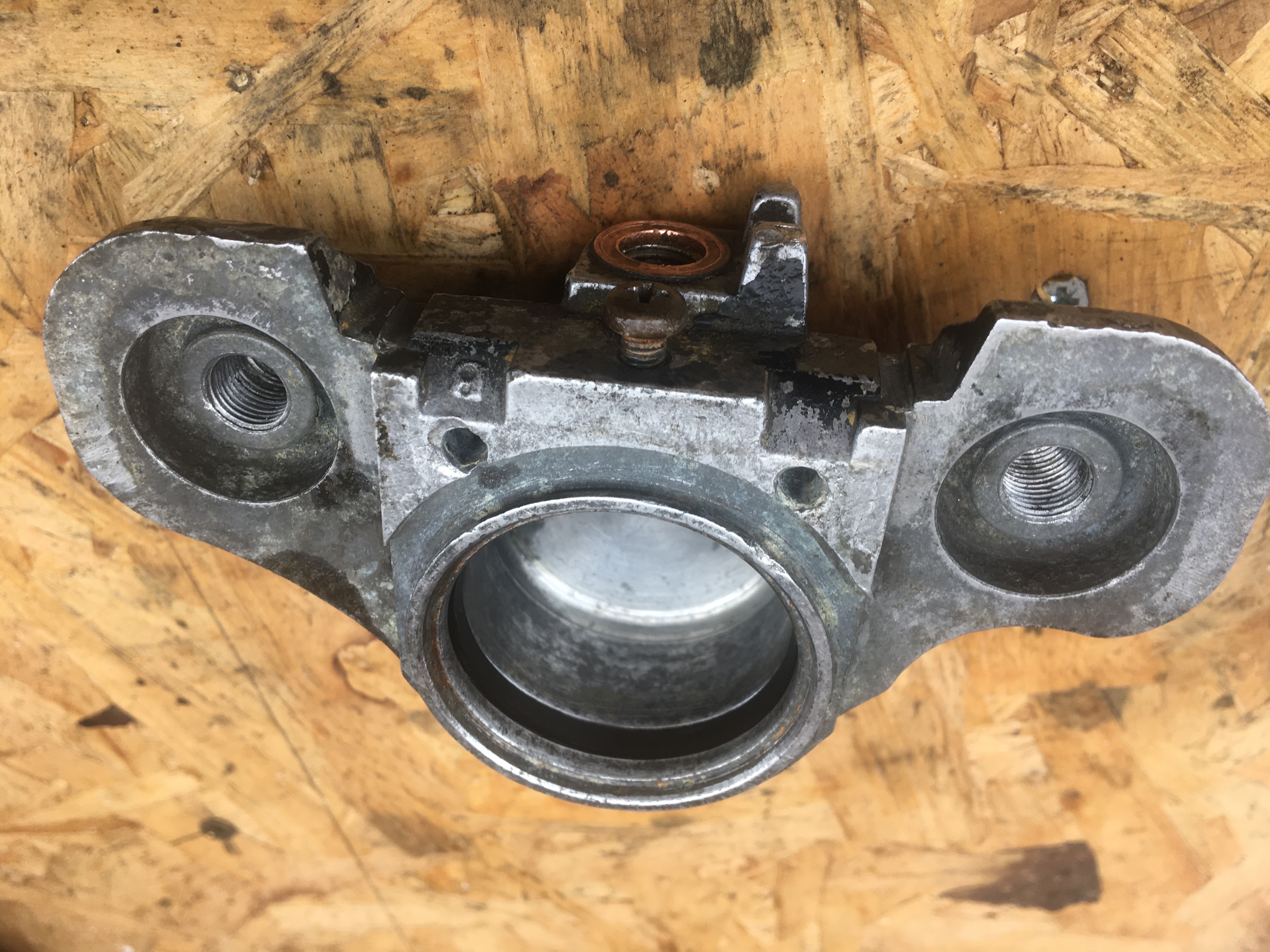
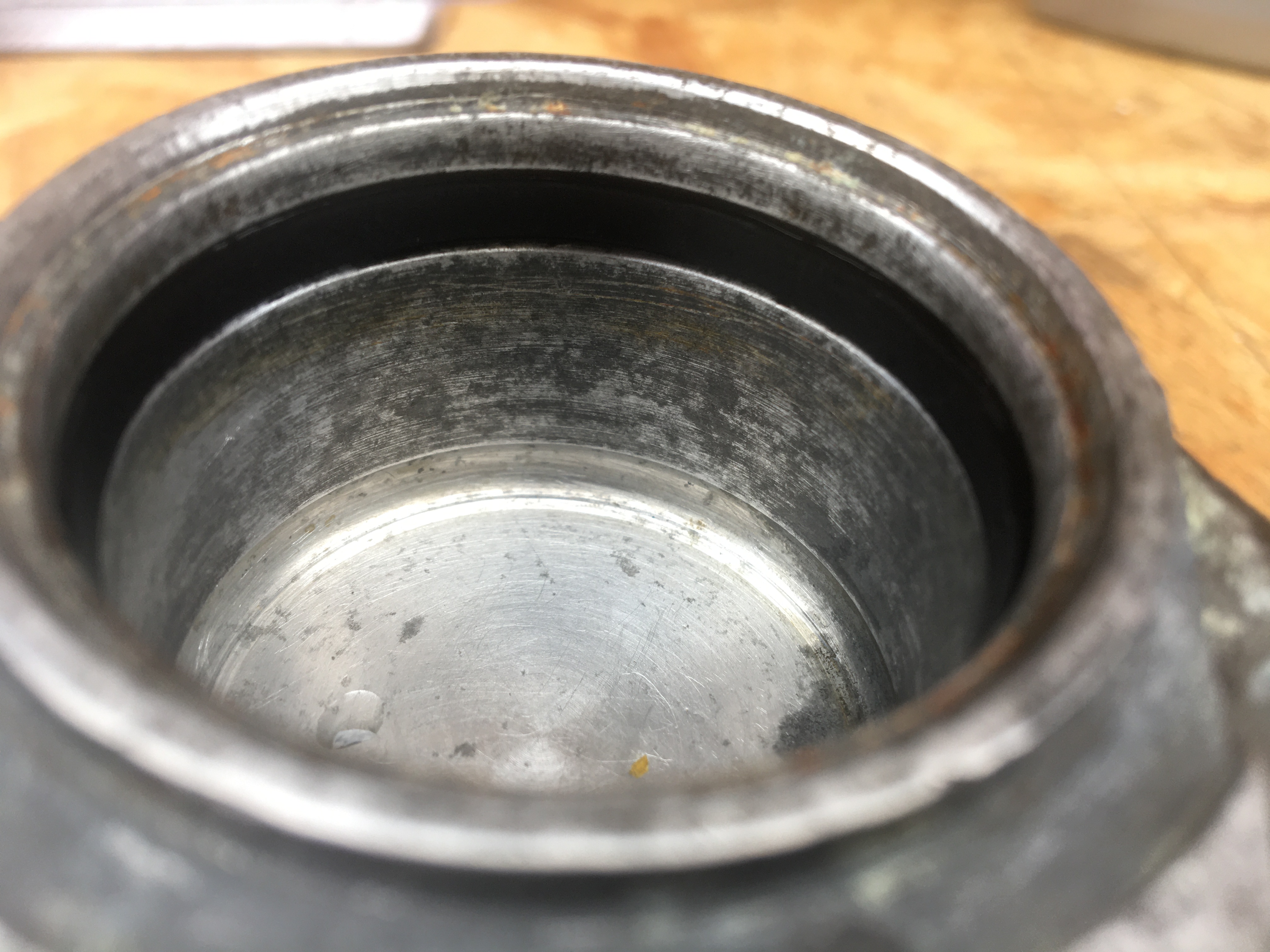
Here’s the calliper cylinder with the corroded piston finally out, the accumulated sludge and corrosion clearly visible.
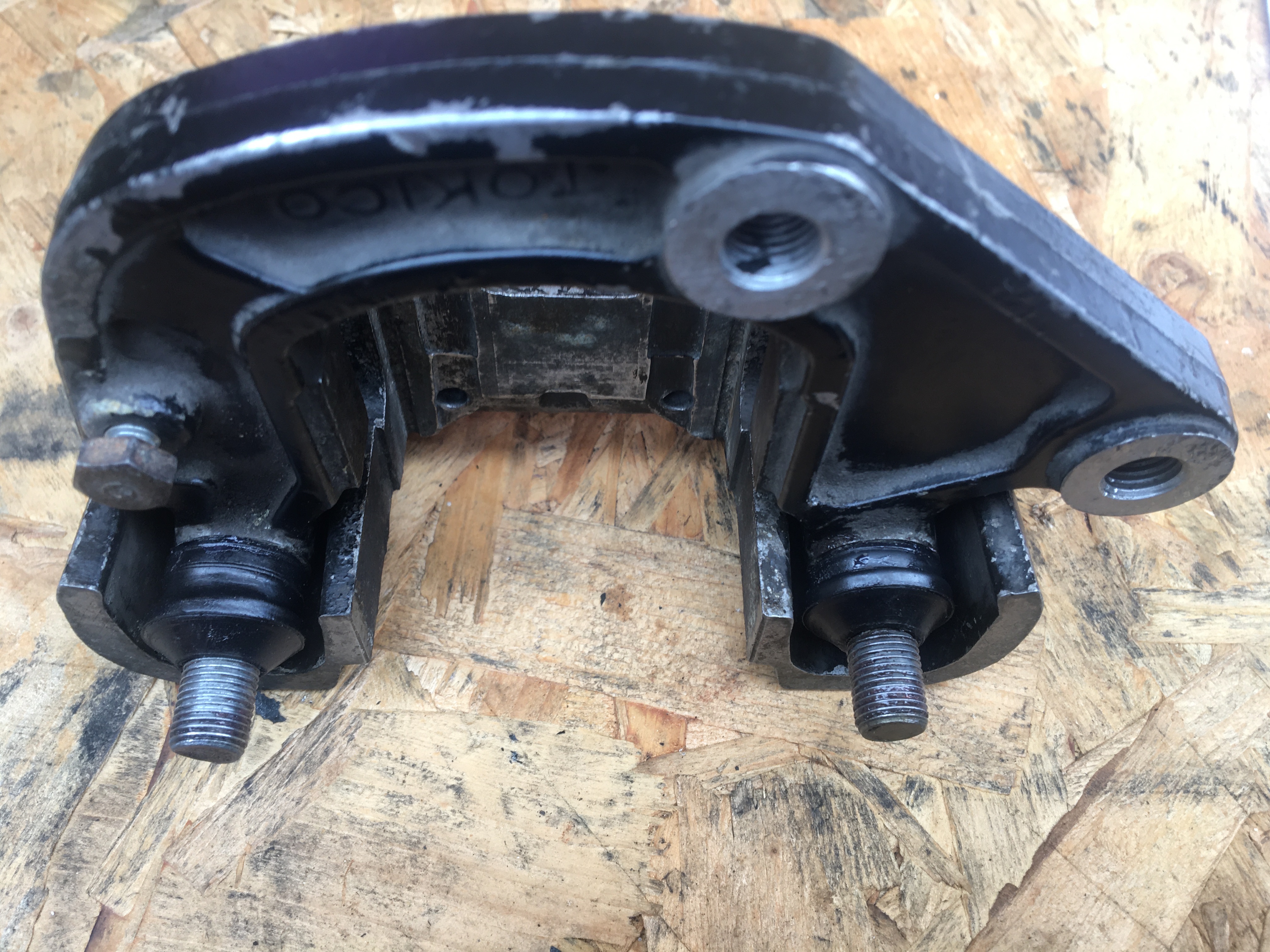
All the calliper castings before final clean
… And after cleaning

At this point I considered re-painting all the calliper parts while they were disassembled. To do this properly we (my brother and I) concluded the parts would have to go away to a specialist and as this project had a shoestring budget that was not an option. We also agreed that the ‘original’ look of the bike was important and there is a certain honesty and genuine appeal to the ‘weathered’ look of the callipers which matches the overall look of the bike as being loved but also well used. A shiny lacquered stove enamelled paint job would most definitely look out of place. Functionality was our prime concern.

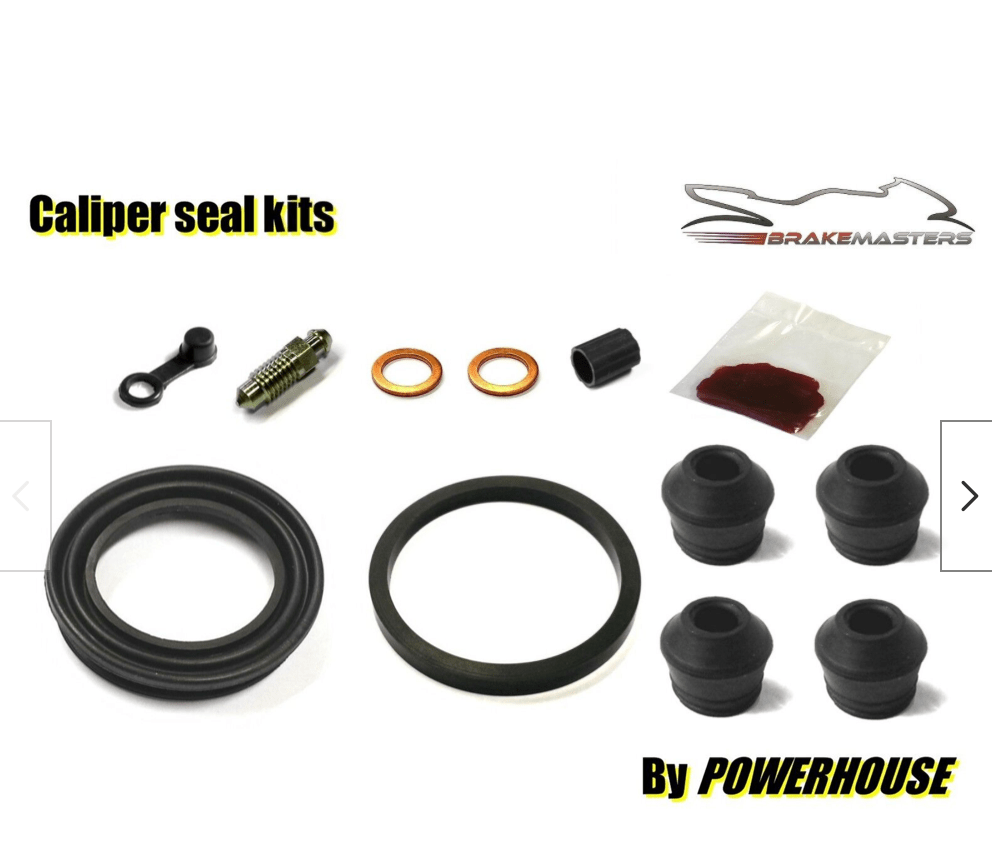
So we needed a seal kit and first stop for classic Honda spares is David Silver Spares and a full list of available spares for the CB 250 RSA can be seen here. Unfortunately no brake calliper parts. Next stop E-bay and seller Powerhouse listed just the kit I needed.

Everything we needed – Result!
Here I am ready to go, another ‘pop up workstation’ location in the shade early evening.
The first seal fitted was the cylinder/piston seal seen here sitting nicely in its groove. The cylinder cleaned up ‘ok’ would love to have access to an ultrasonic cleaner (but that budget remember) so time and elbow grease it was.
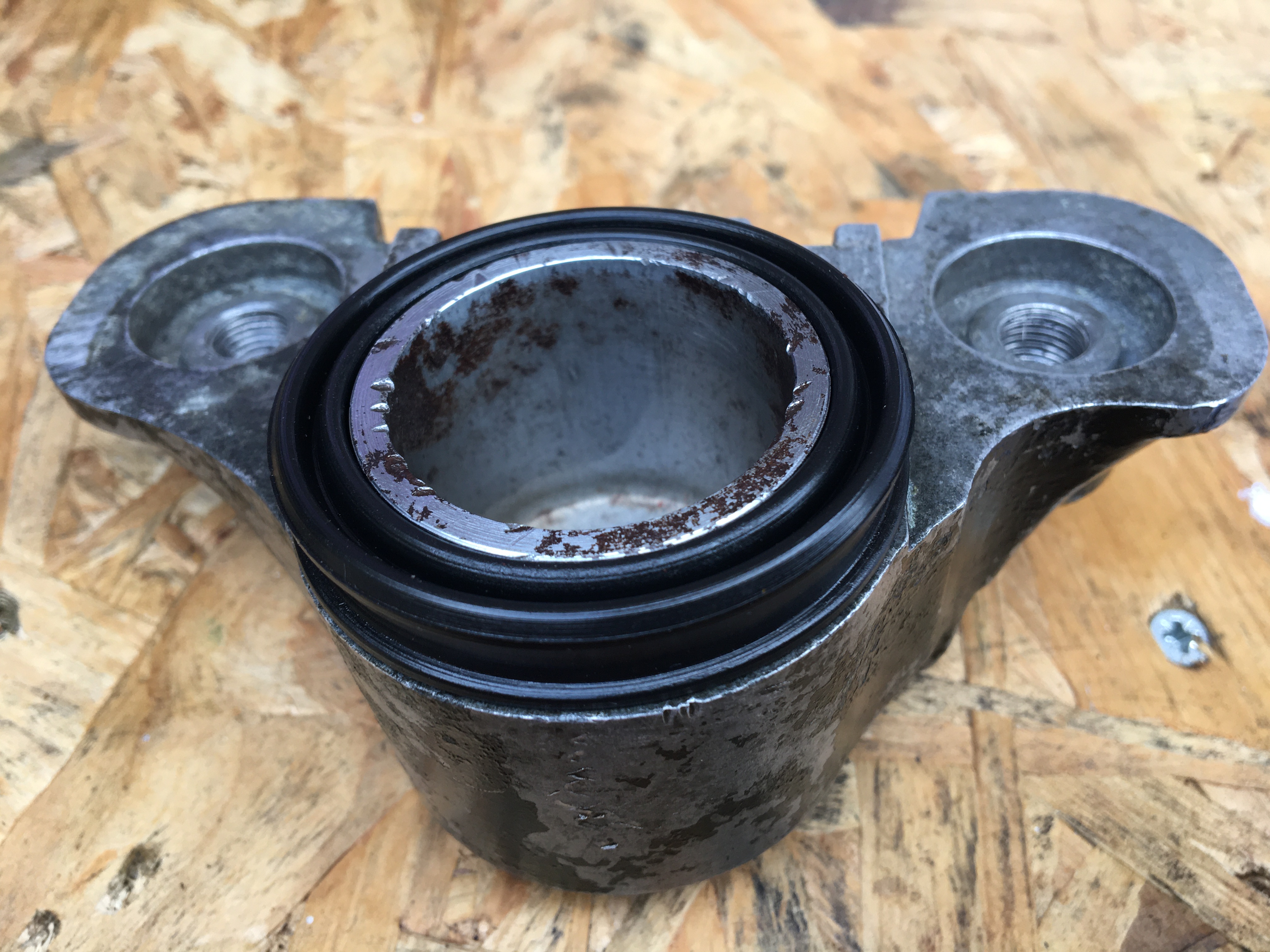
Despite the awful appearance of the piston (see part 2 for images) it did clean up very well. Ideally a new piston but that was another £25 so not this time. Here is the piston back in the cylinder with new piston gaiter, all part of the Powerhouse kit. Note the damage to the piston by pipe grips/mole grips/vice … who knows? Not my brother or me, some previous owner? I removed the piston using ‘This Method‘ … 🙂
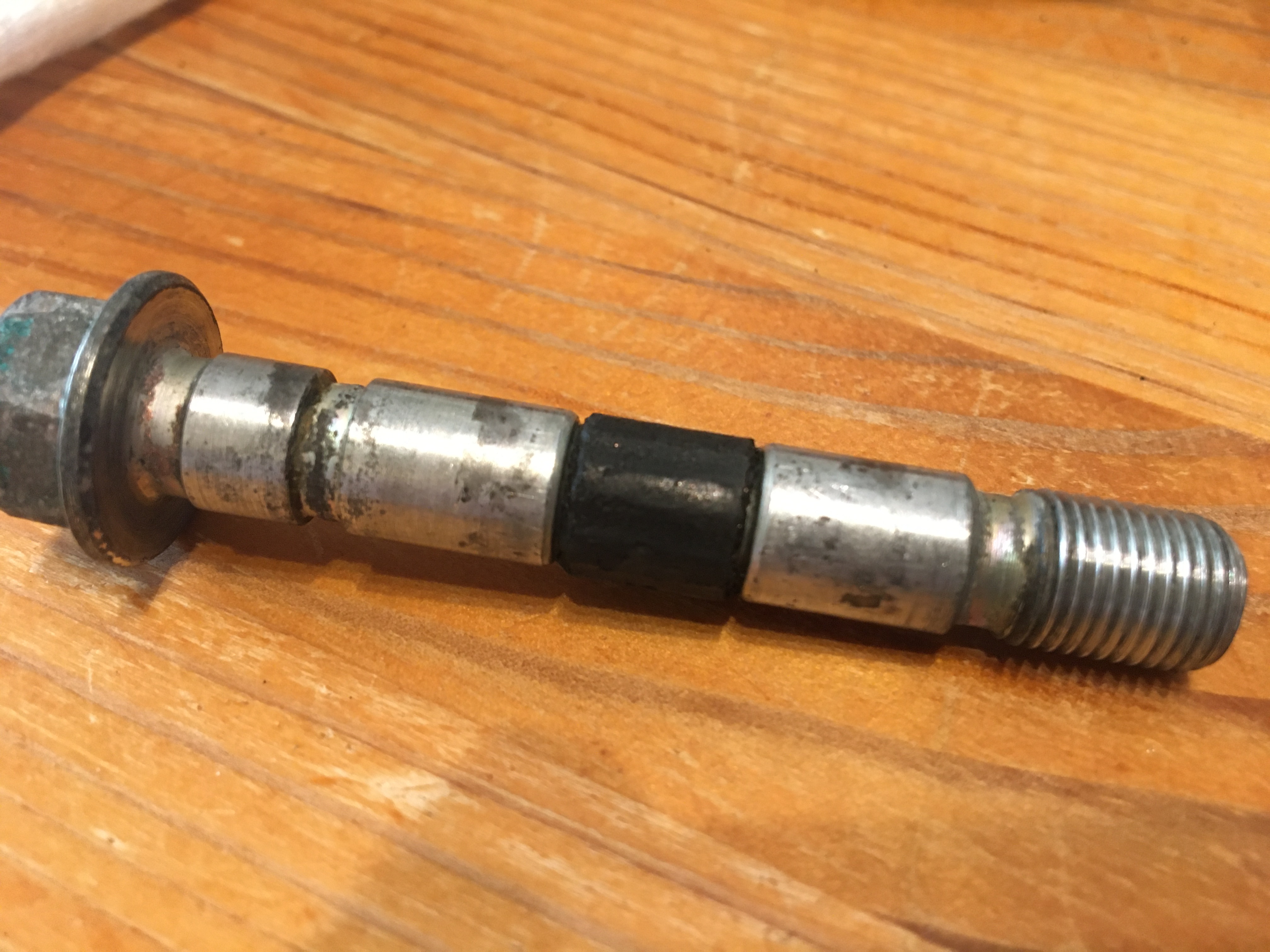
One of the two calliper slide bolts has this rubber sleeve which had perished and seemed to have swollen, there was no way it was going to slide back in, but a new sleeve was included in the Powerhouse kit.
Here’s a (poor quality – sorry) exploded view from the Haynes Manual … essential reference guide.
1 of 4 new sliding bolt gaiters
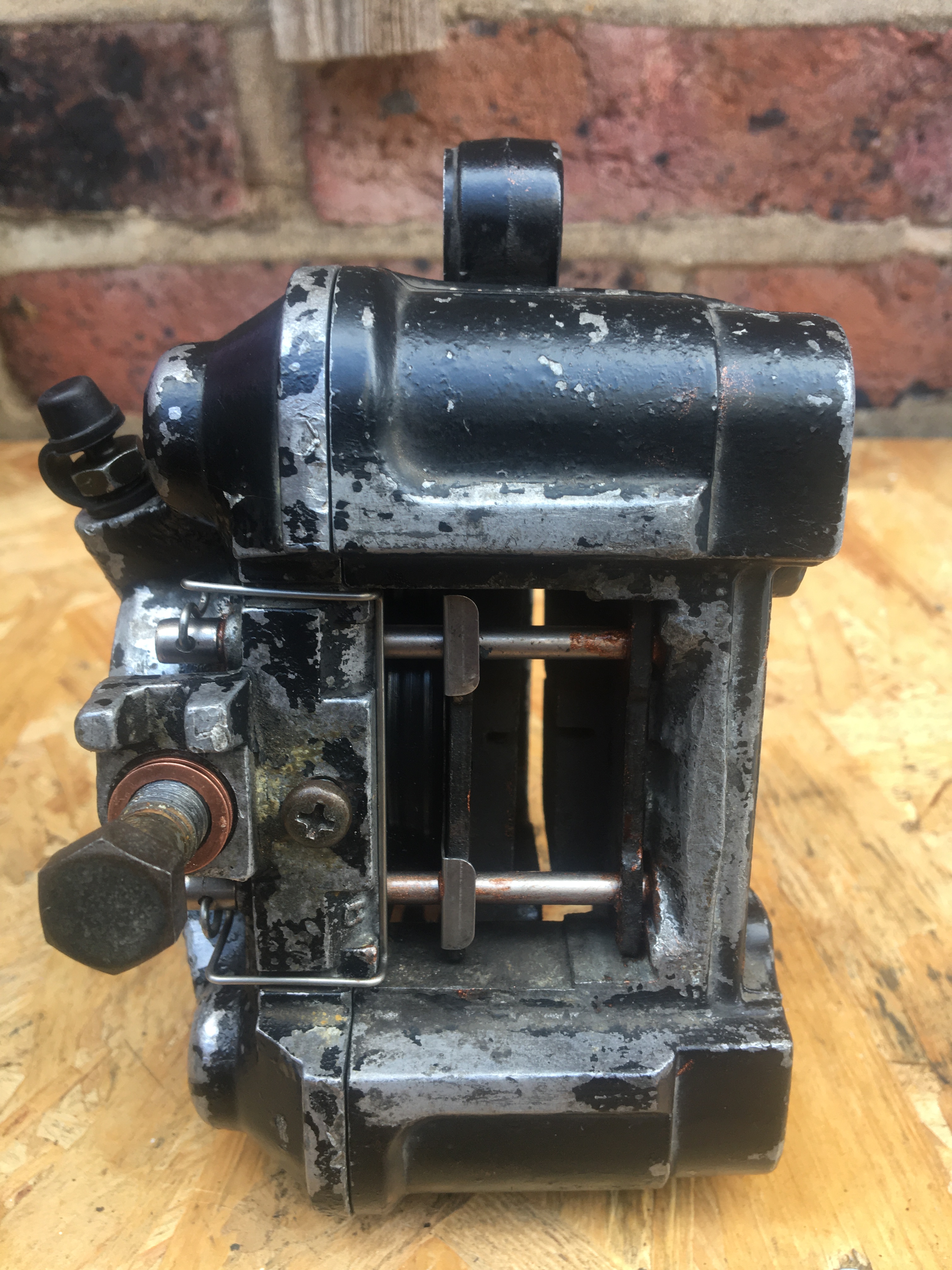
All 4 sliding bolt gaiters fitted (2 unseen at the back) and sliding calliper half assembled.
And here is the calliper assembled with new bleed nipple and new rubber bleed nipple cover.
And here is the calliper back on the bike, bled and ready to go.

End of Part 3.

Thank you for reading.

Recap Part 2 Part 1 Part 3 Part 4 Part 5 Part 6 Part 7

… And if you’ve just joined at Part 3, below is a little background to this story.

Motorcycling is in my blood [ RIP Dad – A Truly Great Father ] and because of motorcycles I’ve literally spilled many pints of blood [ Conscious Throughout ] My Dad passed the DNA and the bug to me in 1976 aged 15. My younger brother then aged 10 also caught the bug and eventually carried on the motorcycling tradition for far longer than myself. I rode on and off from age 15 to 40, all weathers, commuting on various ‘hack bikes’ while pampering and saving the main bike for dry (mainly) runs out for the sheer joy of riding. My brother recently bought a new 2023 Triumph 765 Street Triple R, a two wheeled sculpture if ever there was such a thing. The Street Triple was to join his stable of bikes alongside his classic Triumph Daytona 1200, and another classic, the Honda CB250 RSA you see below. The little Honda was his ‘hack bike’ back in the day, not used since 2010 and carefully stored, dry and covered in our Dad’s old garage. That garage is a shrine to our dear father, not really disturbed since his sad passing in 2016.

So the Street Triple needed room, the garage needs sorting but both my brother and I are dreading the day we have to disturb our Dad’s workshop and birthplace to so much of his woodwork creativity, and so many precious memories. The motorcycling bug never dies, although I myself have not ridden for over 20 years, the pull has always been there and watching the wonderful Allen Millyard‘s YouTube channel has fed my interest in the mean time, and when my brother suggested I take custody of his little classic Honda and get her back on the road I jumped at the chance!

… And Why ‘Zen’?

There’s a stand out section for me in the book Zen and the Art of Motorcycle Maintenance, and it is the part where the author describes making, or proposing to make makeshift ‘shims’ for his friends John and Sylvia Sutherland’s new and exclusively dealer serviced BMW motorcycle. Pirsig tries to explain how shims made from a discarded Coca-Cola can would be perfectly adequate and functionally identical to those fitted by the BMW Dealer’s mechanics at exorbitant costs. John Sutherland could not see this or be convinced, so programmed was he that only the main dealer has the expertise, equipment and materials to carry out such a task.

“In the book, the narrator describes the “romantic” approach to life of his friend, John Sutherland, who chooses not to learn how to maintain his expensive new motorcycle. John simply hopes for the best with his bike, and when problems do occur he often becomes frustrated and is forced to rely on professional mechanics to repair it. In contrast, the “classical” narrator has an older motorcycle which he is usually able to diagnose and repair himself through the use of rational problem-solving skills.”

Part 2 Part 1 Part 3 Part 4 Part 5 Part 6 Part 7

Zen and the Art of DIY Motorcycle Maintenance #02 …

Front Brake – What Front Brake? (Part 2)

Removal Of Seized Front Brake Piston – The Easy Way

A 40 year old Classic Honda Motorcycle. No road tax, no MOT, cheap to run – an answer to the Cost Of Living Crisis?

What follows is a pictorial account with description of the 1st phase of that restoration – The missing Front Brake Part 2 …

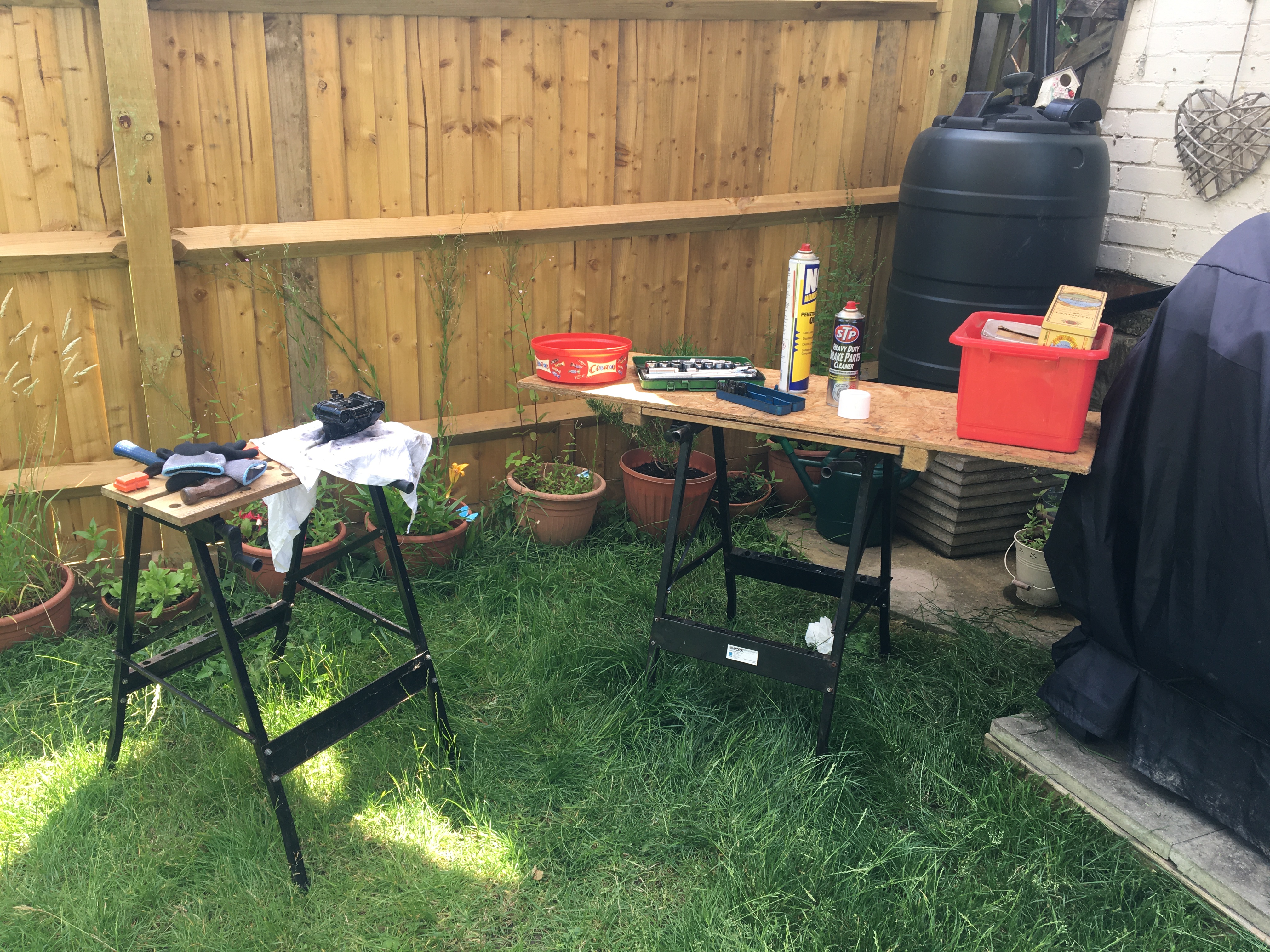
So, I don’t have a garage and the drive where I can work on the bike is south facing. It was a very hot day and my solution was to set up a ‘Pop Up Workstation’ consisting of a workmate under the BBQ parasol.
All set and in the shade … result
Calliper off the bike and on the bench … well, workmate!

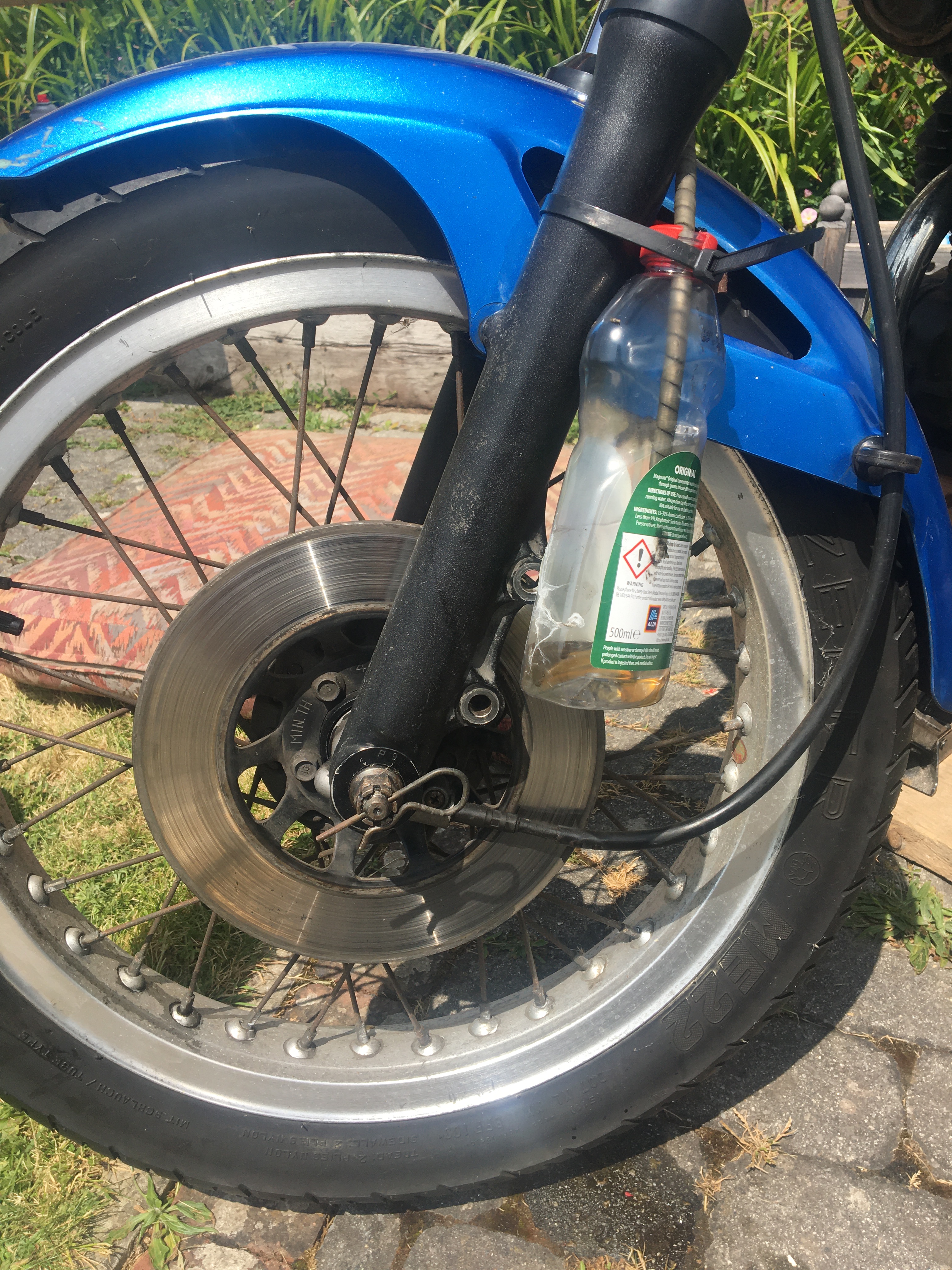
Makeshift brake fluid ‘catcher’ cable tied to fork leg while the calliper is stripped and parts ordered
First challenge was the single screw holing the pressed steel pad cover. Didn’t want to budge so I dug out another 40+ year old relic … see next image
… A couple of sharp taps using my trusty impact driver had that screw out undamaged.
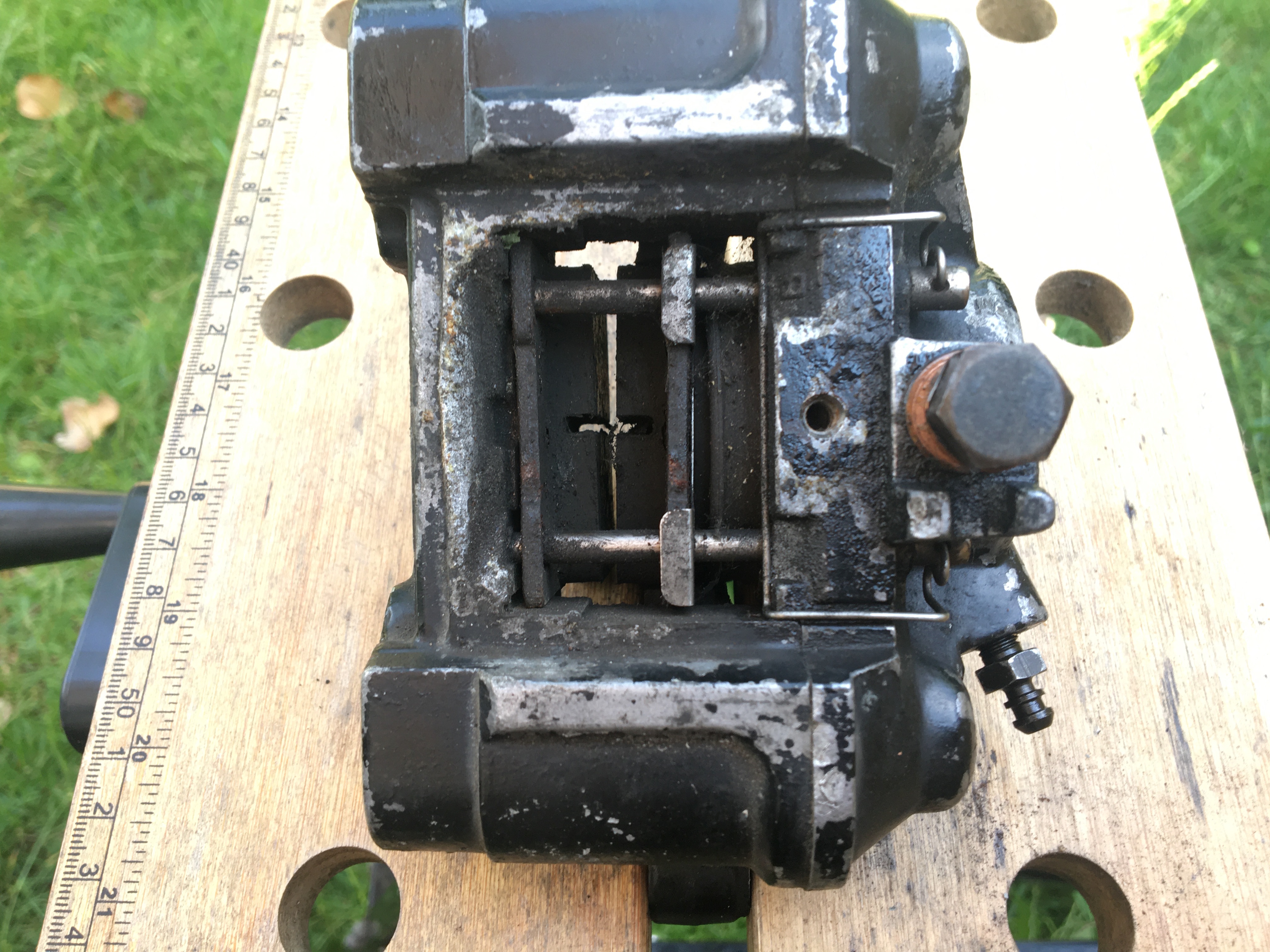
With the cover plate off the old pads and the general mucky condition of the calliper’s working parts could be seen.
The 2 pins that locate the pads were in no mood to pull out easily, a gentle tap with a Pin Punch persuaded the pins to surrender without any fuss or damage
Apologies for the out-of-focus image. And here came another lesson! To dismantle the calliper and gain access to the sliding bolts that create the ‘floating calliper’ design, a 14mm ‘reduced socket’ is required. This issue ‘stopped play’ for that day while a socket was ordered! … (next day) … With the correct socket the 2 bolts undid ‘reasonably easily’ but another rusty mechanic’s mistake meant it was more of a struggle than it should have been – note for next time – release these 2 bolts while the calliper is still on the fork leg, easily reachable through the spokes of the from wheel with a 4″ extension.
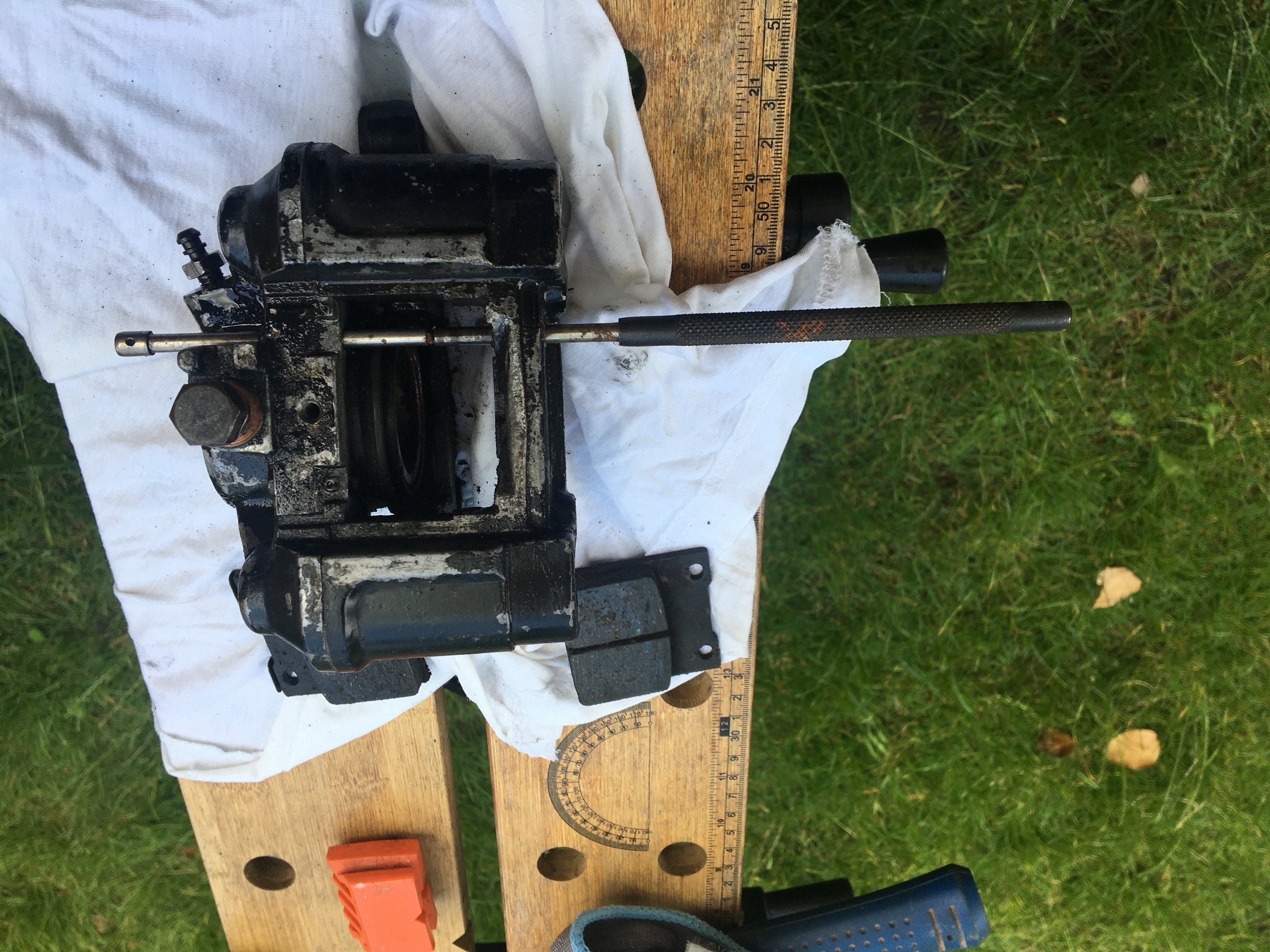
… Here is the calliper half complete with seized piston (see my mistake yet?) …
… And here is the whole calliper dissasembled

And here is yet another ‘rusty mechanics’ failing! It has been over 20 years since I worked on bikes but … NO EXCUSE! That piston is going NOWHERE! Looking closely I could see the piston had previously been subject to the stilsons/pipe grips/vice jaws treatment, no way to treat a piston! I tried briefly with compressed air (albeit from a hand pump) to no avail. Anyhow, what I should have thought of earlier and saved myself a lot of time and double handling was to use good old hydraulic pressure to force out that stubborn piston. In other words use the actual brake system to remove the piston.

So, I loosely re-assembled the calliper lightly nipping the sliding bolts. re-attached the calliper minus brake pads, sliding bolt rubber boots, piston rubber boot etc, using just one fork leg bolt so as to enable swinging the calliper clear of the disc, re-connected the hydraulic ‘banjo’ fitting, bled the system (again!) and … see below

… Note the calliper attached using just one bolt to enable the calliper to be swung out away from and clear of the brake disc. Banjo re-attached and system bled.
Here’s a brief video of the piston being persuaded to move …
Here is the piston pumped out as far as possible using the brake lever and good old hydraulics. One thing to be aware of when using this technique is that the fluid reservoir is not designed/does not have the oil capacity to move the piston this far. while gently pumping the brake lever, keep an eye on the fluid level and keep topping up to avoid ingress of air.
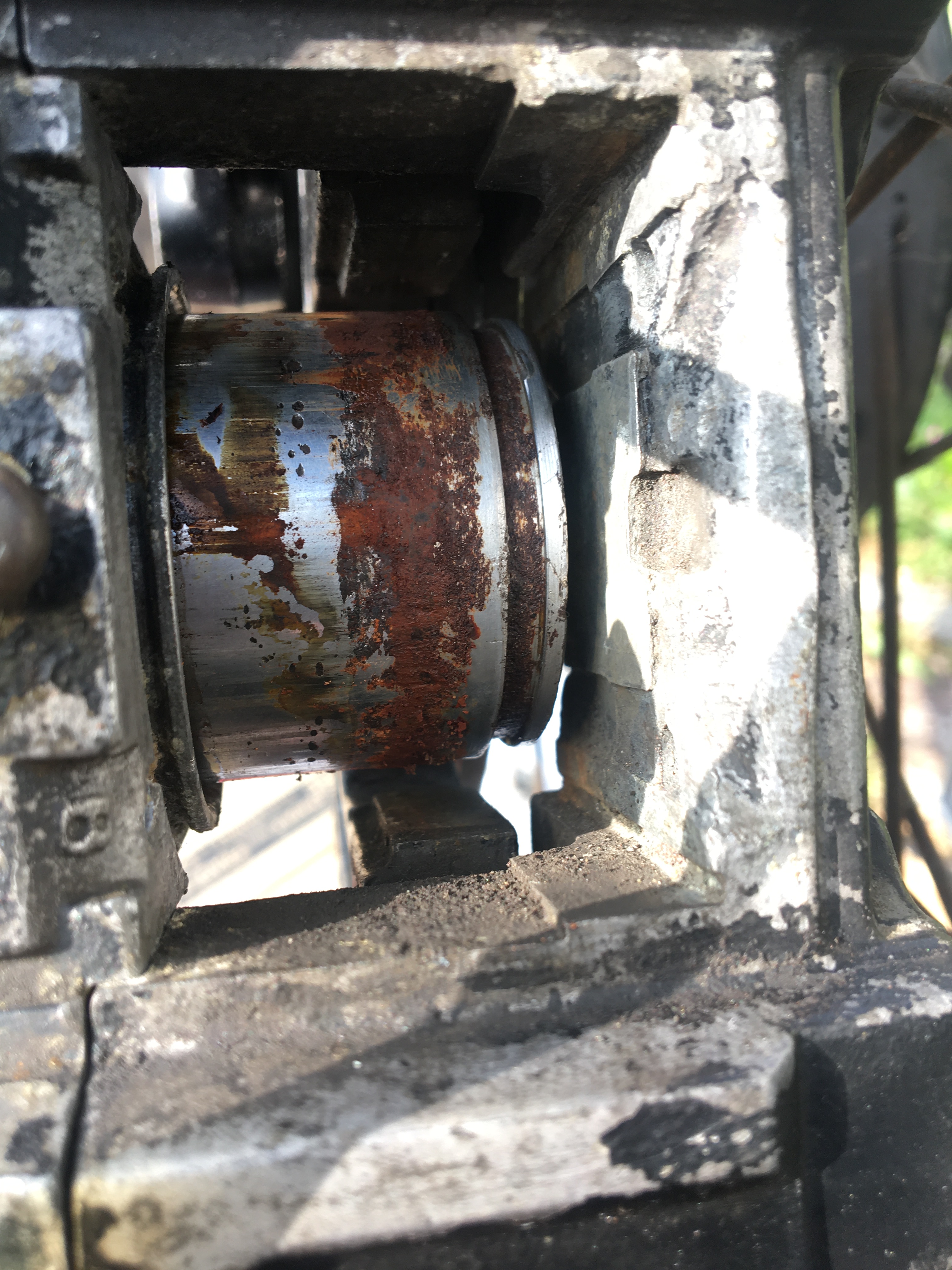
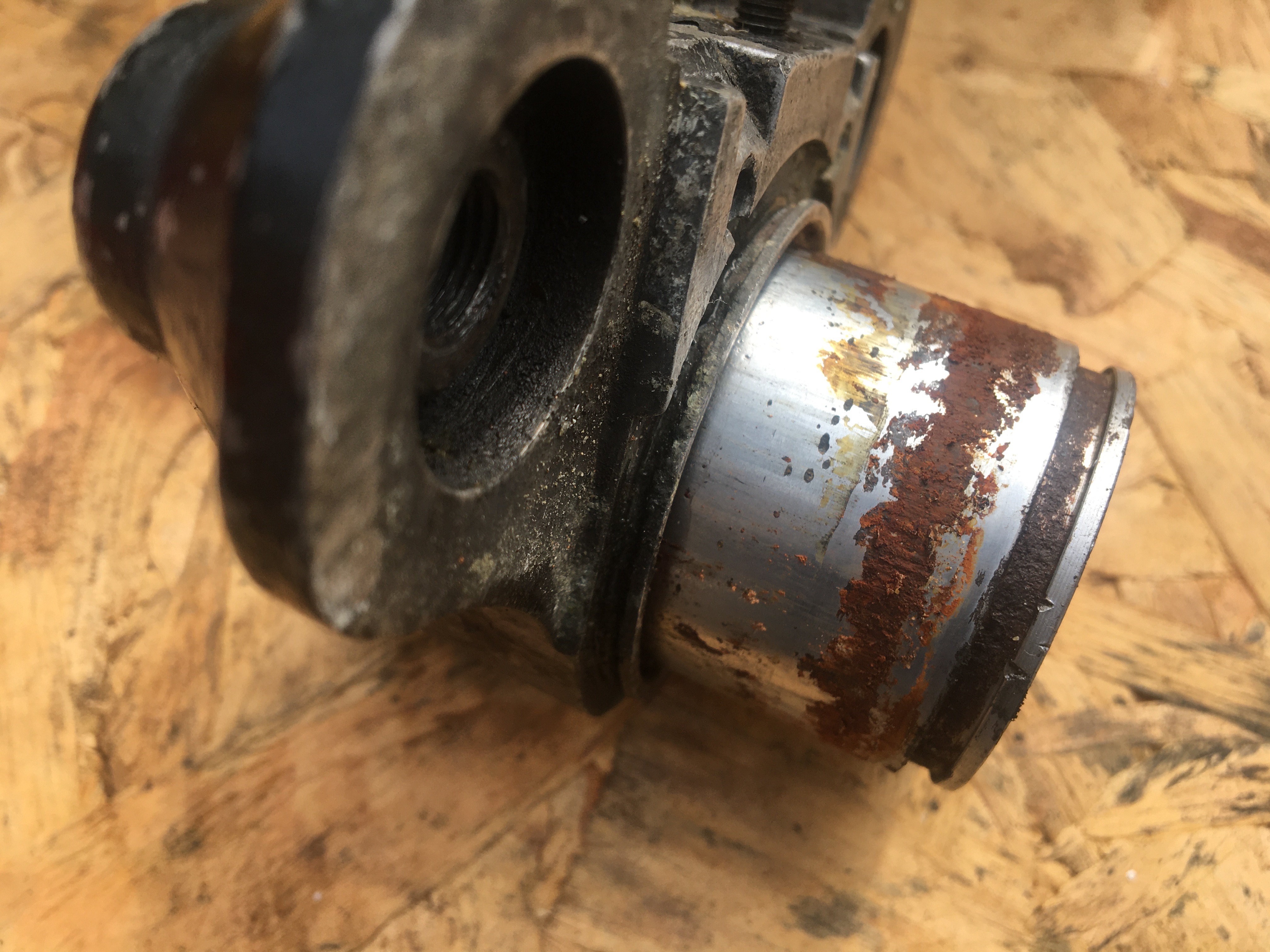
So here is the calliper off the bike and stripped again. As you cn see that piston is in very bad shape.
Again with the piston completely out showing the extent of the corrosion.

End of Part 2. 

Thank you for reading.

… And if you’ve just joined at Part 2, below is a little background to this story.

Motorcycling is in my blood [ RIP Dad – A Truly Great Father ] and because of motorcycles I’ve literally spilled many pints of blood [ Conscious Throughout ] My Dad passed the DNA and the bug to me in 1976 aged 15. My younger brother then aged 10 also caught the bug and eventually carried on the motorcycling tradition for far longer than myself. I rode on and off from age 15 to 40, all weathers, commuting on various ‘hack bikes’ while pampering and saving the main bike for dry (mainly) runs out for the sheer joy of riding. My brother recently bought a new 2023 Triumph 765 Street Triple R, a two wheeled sculpture if ever there was such a thing. The Street Triple was to join his stable of bikes alongside his classic Triumph Daytona 1200, and another classic, the Honda CB250 RSA you see below. The little Honda was his ‘hack bike’ back in the day, not used since 2010 and carefully stored, dry and covered in our Dad’s old garage. That garage is a shrine to our dear father, not really disturbed since his sad passing in 2016.

So the Street Triple needed room, the garage needs sorting but both my brother and I are dreading the day we have to disturb our Dad’s workshop and birthplace to so much of his woodwork creativity, and so many precious memories. The motorcycling bug never dies, although I myself have not ridden for over 20 years, the pull has always been there and watching the wonderful Allen Millyard‘s YouTube channel has fed my interest in the mean time, and when my brother suggested I take custody of his little classic Honda and get her back on the road I jumped at the chance!

… And Why ‘Zen’?

There’s a stand out section for me in the book Zen and the Art of Motorcycle Maintenance, and it is the part where the author describes making, or proposing to make makeshift ‘shims’ for his friends John and Sylvia Sutherland’s new and exclusively dealer serviced BMW motorcycle. Pirsig tries to explain how shims made from a discarded Coca-Cola can would be perfectly adequate and functionally identical to those fitted by the BMW Dealer’s mechanics at exorbitant costs. John Sutherland could not see this or be convinced, so programmed was he that only the main dealer has the expertise, equipment and materials to carry out such a task.

“In the book, the narrator describes the “romantic” approach to life of his friend, John Sutherland, who chooses not to learn how to maintain his expensive new motorcycle. John simply hopes for the best with his bike, and when problems do occur he often becomes frustrated and is forced to rely on professional mechanics to repair it. In contrast, the “classical” narrator has an older motorcycle which he is usually able to diagnose and repair himself through the use of rational problem-solving skills.”
Recap Part 1 Part 3 Part 4 Part 5 Part 6 Part 7

Zen and the Art of DIY Motorcycle Maintenance #01 …

Front Brake – What Front Brake? (Part 1)

Motorcycling is in my blood [ RIP Dad – A Truly Great Father ] and because of motorcycles I’ve literally spilled many pints of blood [ Conscious Throughout ] My Dad passed the DNA and the bug to me in 1976 aged 15. My younger brother then aged 10 also caught the bug and eventually carried on the motorcycling tradition for far longer than myself. I rode on and off from age 15 to 40, all weathers, commuting on various ‘hack bikes’ while pampering and saving the main bike for dry (mainly) runs out for the sheer joy of riding. My brother recently bought a new 2023 Triumph 765 Street Triple R, a two wheeled sculpture if ever there was such a thing. The Street Triple was to join his stable of bikes alongside his classic Triumph Daytona 1200, and another classic, the Honda CB250 RSA you see below. The little Honda was his ‘hack bike’ back in the day, not used since 2010 and carefully stored, dry and covered in our Dad’s old garage. That garage is a shrine to our dear father, not really disturbed since his sad passing in 2016.

So the Street Triple needed room, the garage needs sorting but both my brother and I are dreading the day we have to disturb our Dad’s workshop and birthplace to so much of his woodwork creativity, and so many precious memories. The motorcycling bug never dies, although I myself have not ridden for over 20 years, the pull has always been there and watching the wonderful Allen Millyard‘s YouTube channel has fed my interest in the mean time, and when my brother suggested I take custody of his little classic Honda and get her back on the road I jumped at the chance!

What follows is a pictorial account with description of the 1st phase of that restoration – The missing Front Brake …

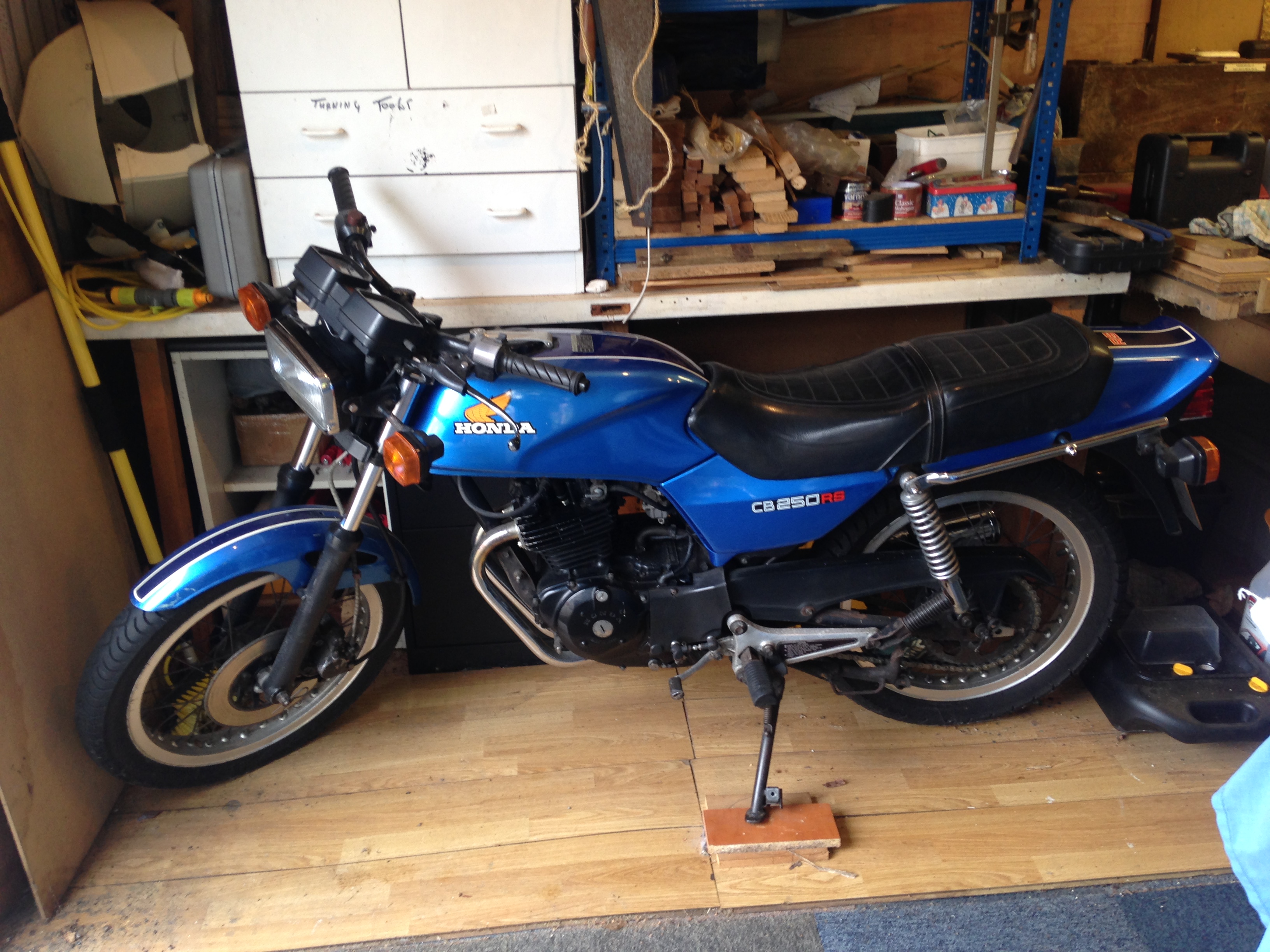
So here she is, a 1983 Honda CB 250 RSA. All standard apart from the exhaust which is now a Motad 2-into-1 system. Seen here still in Dad’s garage/workshop ready for a 60 mile ride in the back of my brother’s van to me for some new parts to get her roadworthy again.
View from the seat, 51,000 miles on the clock, note the missing front brake lever/reservoir/master cylinder.
One last view from the front before loading onto the van. A fine looking little motorcycle!
And here she is on my drive (excuse the car/clutter in the background!
1st job was to replace the front brake lever assembly. Note the new unit in the background against the original in the foreground. The whole brake lever unit was supplied by David Silver Spares who are Honda specialists, especially classic models like this 1983 CB 250 RSA – 40 Years Old!
New unit came with new hydraulic ‘banjo’ clamping bolt (right) I needed to re-use the 2 copper washers (seen on the original bolt left) So …
… I gave them a light clean with fine emery cloth and made a makeshift ‘annealing jig’ out of an old nail!
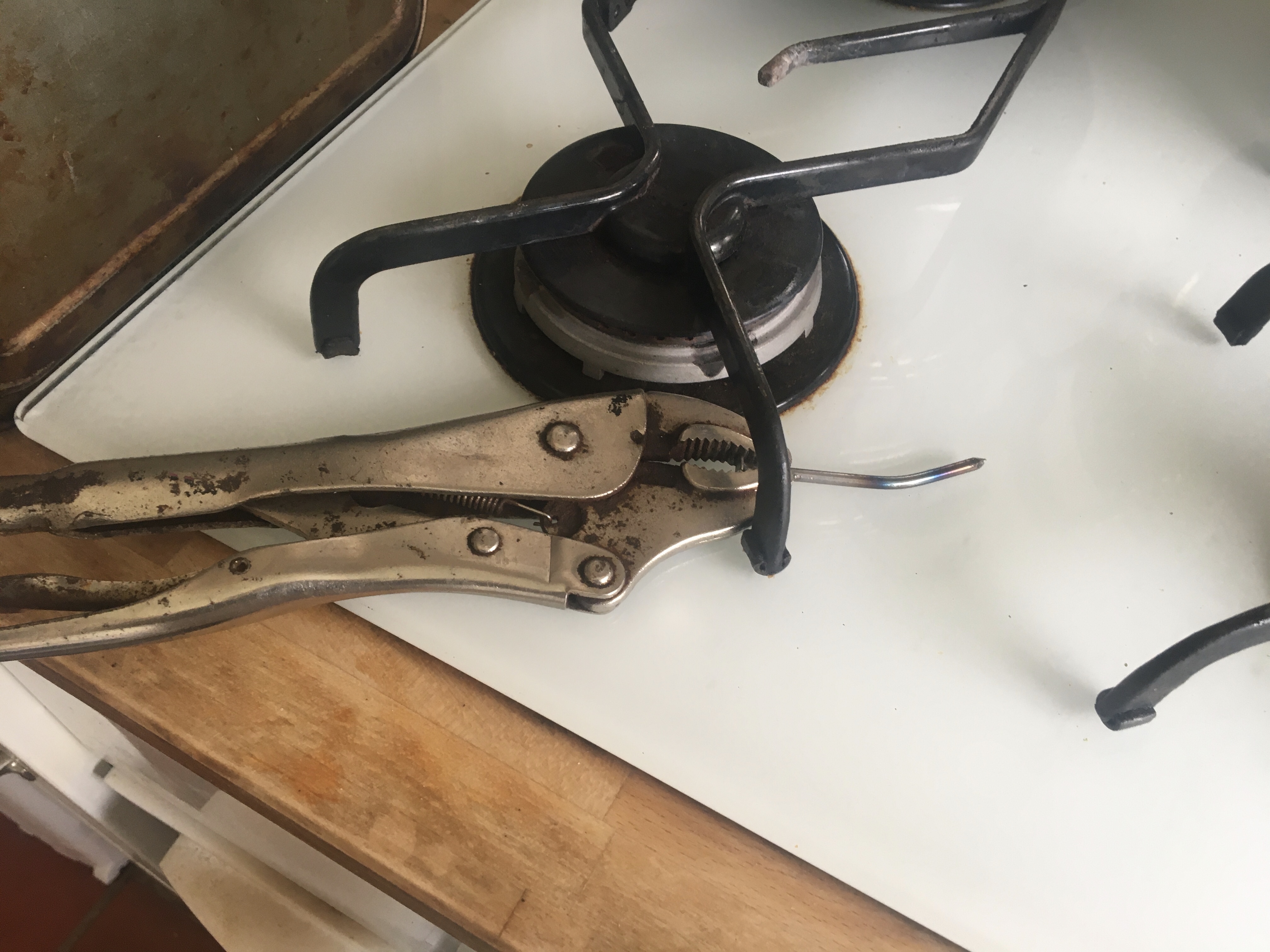
Then into the kitchen with the nail clamped in mole grips to hook the 2 washers and heat over the gas hob until cherry red before plunging in cold water.
Here are the 2 annealed washers assembled on the new bolt and brake lever unit ready for tightening.
And here it is fitted, hydraulic banjo bolt & washers tightened, rubber boot fitted. And also the new David Silver supplied brake lever assembly included an inbuilt brake light micro switch (which the original did not) The wiring however was there and just needed connecting! We think this is the first time in this bike’s 40 year life that the brake/stop light has worked for the front brake!
Here’s the brand new front brake hydraulic fluid reservoir squeaky clean and ready for DOT 4 brake fluid also supplied by David Silver Spares …. BUT!!

So. I made my first rusty mechanic’s mistake here! I proceeded to fill the reservoir, and bleed the system via the brake caliper bleed nipple/drain tube etc. All Good. But it wasn’t! something was wrong and it soon became apparent that the calliper/piston/sliding half was seized! Stupid oversight, I should have stripped & inspected the brake calliper on a 40 year old bike that hadn’t been ridden since 2011!

Why ‘Zen’?

There’s a stand out section for me in the book Zen and the Art of Motorcycle Maintenance, and it is the part where the author describes making, or proposing to make makeshift ‘shims’ for his friends John and Sylvia Sutherland’s new and exclusively dealer serviced BMW motorcycle. Pirsig tries to explain how shims made from a discarded Coca-Cola can would be perfectly adequate and functionally identical to those fitted by the BMW Dealer’s mechanics at exorbitant costs. John Sutherland could not see this or be convinced, so programmed was he that only the main dealer has the expertise, equipment and materials to carry out such a task.

“In the book, the narrator describes the “romantic” approach to life of his friend, John Sutherland, who chooses not to learn how to maintain his expensive new motorcycle. John simply hopes for the best with his bike, and when problems do occur he often becomes frustrated and is forced to rely on professional mechanics to repair it. In contrast, the “classical” narrator has an older motorcycle which he is usually able to diagnose and repair himself through the use of rational problem-solving skills.”
End of Part 1.

Thank you for reading.

Part 2 Part 3 Part 4 Part 5 Part 6 Part 7

Once there was Social Security, now there’s the Tories and their DWP (Pt.1)

From the archive: Reposted due to the crippling impact now of mortgage interest rate payments, energy costs, inflation etc. I realised there must be many disabled people like myself with a similar, depressing and scary predicament. We ‘were’ just about managing … but not now

I thought I’d write about my experiences with the DWP since turning to them for some help in 2012. I will start with a letter I wrote to my GP and others some 13 or so months later in 2013 …

A letter to; My Doctor. My MP. The DWP. The Courts Tribunal Service.

Over a year ago, mid August 2012 after several months of ever increasing pain & reduced ability to work I eventually booked an appointment with my GP. This was the first time I had seen my GP since 2004. Being self-employed, I had soldiered on with my aches & pains for 13 years since spinal surgery in 2000. In fact 33 years since 1979 when I had a rather nasty Road Traffic Accident that started all my long term skeletal problems. 

My GP was great and agreed to get me to specialists for advice on any possible treatment for my long term ankle and more urgently, back pain. 

Meanwhile being self-employed with no sick pay and a young family, mortgage & all the associated bills thereof, I contacted the DWP. It seemed there was something called ESA. An advisor at the JobCentre told me via telephone that this would be an entitlement given my contributions to National Insurance, income tax etc since starting work at 16 in 1976. 

Despite the GP prescribed pain killers, my back pain worsened, my income trickled down to zero during the next couple of months & inevitably, my customers looked elsewhere. I was awarded ESA, contributions based at £42 per week. Not very much but every little helped. I had by now contacted my bank, credit card issuers, loan companies, mortgage company etc to inform/warn of my financial predicament as one is advised to do in such circumstances.

In November I was seen by a specialist regarding my long term ankle pain as a result of my 1979 accident. Luckily I have an orthopaedic splint made for me in 2003 by the Conquest Hospital via the then orthopaedic specialist, which along with the painkillers helps alleviate the pain. This made the updated diagnosis of traumatic arthritis of the damaged ankle a lower priority than my agonising & incapacitating back pain. I was placed on a list for some targeted pain killing injections in my ankle. Not a long term solution I felt but I went along with the consent.

In December I wrote to my GP asking for progress on the referral for my back problem. At the same time I was asked to attend an ATOS Work Capability Assessment (WCA) in Hastings. This I painfully attended under threat of losing my £40 odd pounds per week award. I was puzzled at not being asked to remove my surgical splint for the medical exam but then they are the experts, aren’t they? In January 2013 a letter arrived from the DWP, as a result of the WCA exam I had been placed in the Work Related Activity Group (WRAG) and would need to attend a meeting with a ‘disability adviser’ at my local Job Centre. This I duly attended (again under threat of loss of payment) and struggled up to the first floor (no lift) in much pain & discomfort only to be told that I was obviously unfit for any work. As this all seemed very illogical and with no sign of any appointment with a back specialist I asked that the DWP decision be looked at again and subsequently appealed against the decision.

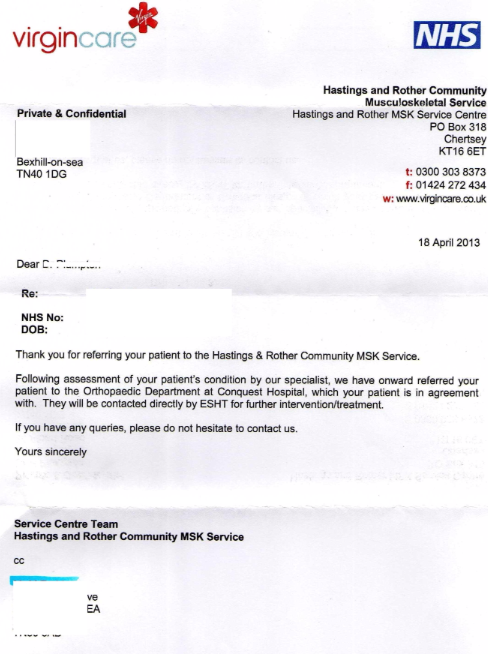
February 2013 I receive a letter from ‘VirginCare‘.(Note: NHS Logo) With an appointment date to see an ‘Extended Practitioner’. 

This centre in Hastings I attend and am advised to have an MRI scan. This took place in Eastbourne later that same month. At the follow up feedback appointment back in the Hastings Virgin Care centre I was told that I need to be referred back to the NHS to see a surgeon for severe damage to discs & nerve damage. 

By this time my business is now gone. My financial problems are much worse with CAB advising Bankruptcy as my only option. I have constant pain & discomfort. On a visit to my GP (to request the DWP demanding ‘sick note’) I discuss further pain relief & Neuropathic tablets to help with the constant sciatica & feet pain. My blood pressure is very high. I very reluctantly ask for help with moods having recognised a return of depression which I had been treated for in the late 1990’s. My GP is again very helpful and supportive in prescribing antidepressants & drugs for the blood pressure. 

July 2013. An appointment with a spinal surgeon at the Conquest Hospital. X-rays & exam. I consent to a spinal probe to establish disc damage. Further fixation surgery is mentioned. I expressed to the surgeon my fear of more spinal surgery as the surgery I had in 2000 seemed to have caused the permanent sciatica (in my ‘good’ leg). We agree to discuss this again after the probe.

As I write it is September 2013. No sign of an appointment for the probe. My mental health is deteriorating. I fear any surgery, even the probe. The pain is manageable with the assortment of pain killers I now have providing I do not do very much. And I do not do very much these days. I have watched, read & listened to the media destroying the reputation & integrity of the NHS. And I wonder if I will ever volunteer for any kind of surgical procedure. 

My business has collapsed. I am not fit for work according to the Job Centre. And despite the DWP saying I should be in the Work Related Activity Group, I have not had one invite for a consultation to discuss possible work options.

I conclude now that my stoic attitude to my pain is perhaps my undoing. In 1979 at age 18 I suffered major multiple open fractures to my right leg. Breaks to the knee, severed artery & muscle & badly dislocated ankle. This is like major surgery on the roadside without anaesthetic, fully conscious throughout. There followed months on traction, bone grafting surgery etc, etc. Only someone like myself who has experienced this could understand any of the above. 

I say this because my attitude in life since has been to soldier on. There are folk much worse off. Keep working & because of that experience of pain, my 1 – 10 pain scale sees ’10’ as that on the road, bones, flesh, protruding. That level of pain. 

But in August 2012 I tried to stop grinning and bearing it and ask for help. Both of the medical profession & the DWP. 

My GP has been fantastic & possibly saved my life. 

The DWP have been an incompetent nightmare and sole cause of my anxiety, stress and inevitable depression. The NHS specialists have been very good but I suspect they are frustrated by politics. And Virgin Care who have I bet presented their invoice!

I have tried to keep this brief. I cannot articulate face-to-face or via telephone my thoughts above unfortunately. I needed to get this off of my chest and out of my mind which is increasingly fragile. 

Thank you for reading.

Mr Baffled Ape

The text in italics above is a copy of a letter i wrote to my GP, MP, DWP, Tribunal Service

So, my lovely GP called me on the telephone to see if I was OK and promised to chase up my Spinal Probe surgery. My GP also explained the directive doctors have now to refer people via Virgin Care who then when they see a difficult (non profit I suspect) case refer you back to the NHS. Before Virgin Care the GP would refer you directly to the specialist. Great work Cameron & Hunt!

I received a reply from my MP the Conservative Greg Barker, who said he’d passed it onto his colleague Mr Iain Duncan Smith. I was almost overjoyed with excitement at the prospect of such a letter ¡¡ (inverted exclamation = universal sign for sarcasm)

Meanwhile a 2nd ATOS Work Capability Assessment appointment arrived, despite many phone calls to the Newcastle DWP office explaining  & reminding them of the pending appeal, I was told that I must attend or, you guessed, get sanctioned and lose my ESA award.

So, at this stage I was now 15 months on from asking the DWP for help. Despite paying income tax and having paid in the maximum contributions to National Insurance since starting work in 1976, I am having to fight every step to receive the ‘Social Security’ I am, according to the system entitled to!

End of Part 1 

Part 2 coming soon. The Tribunal, more surgeons etc.

Published on

9/22/14 10:45 AM